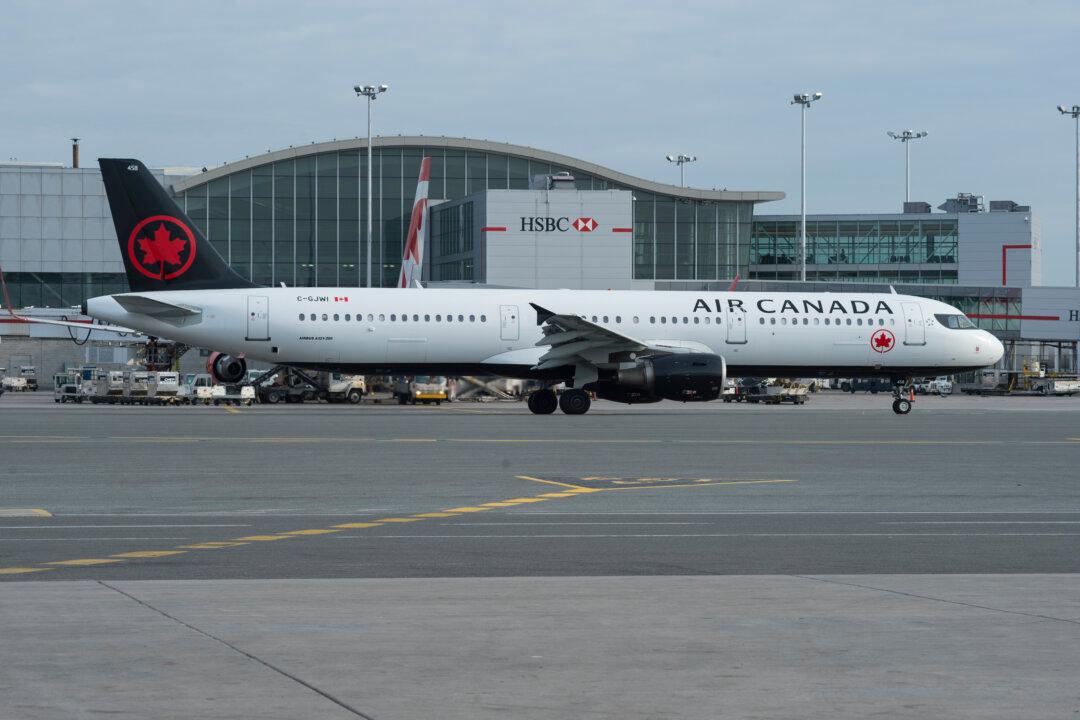
Air Canada’s Airbus A321 is seen at the Toronto Pearson International Airport. Handout photo
Seven Air Canada pilots who refused to get the COVID-19 vaccines will be compensated by Air Canada after they were denied religious exemption and placed on unpaid leave in 2021.
Arbitrator James Hayes ruled on March 3 that Air Canada violated the collective agreement and Canadian Human Rights Act by committing workplace religious discrimination against the seven pilots.
“Where arbitrators in some cases have struggled in assessing the sincerity of a religious objection, that is definitely not the situation here,” Hayes wrote in his decision.
“All of the grievors testified honestly and the substantive nexus between their religious beliefs and objections to the employer mandatory vaccination policy was manifest.”
Hayes said the seven pilots should have been placed on initial paid leaves of absence like their pilot colleagues were who had been granted exemptions at the outset. Instead, the seven pilots who were denied exemptions at the outset were placed on unpaid leaves of absence as of Oct. 31, 2021, while other pilots were granted exemptions and placed on paid leave pending employer consideration of possible accommodation, Hayes said in his arbitration decision.
The seven pilots were eventually granted the exemptions a few months later and placed on unpaid leaves of absence with benefits as of May 9, 2022, as the other pilots also were.
As a result, the seven pilots lost income between Oct. 31, 2021 and May 9, 2022, unlike the other pilots.
Hayes directed Air Canada to compensate the seven pilots within 60 days and to “remain seized in the unlikely event that calculation of those damages becomes an issue.”
Air Canada had introduced its COVID-19 vaccination policy in August 2021, requiring all employees and new hires to be fully vaccinated against COVID-19 and to report their vaccination status by Oct. 30, 2021.
The airline said the policy intended to “ensure the safety and well-being of all employees and customers” and was in line with the federal government’s requirement for employees in federally regulated air, rail, and marine transportation sectors to be vaccinated by the end of October 2021.
“While Air Canada will fulfill its duties to accommodate employees who for valid reasons, such as medical conditions, cannot be vaccinated, failure to be fully vaccinated by October 30, 2021 will have consequences up to and including unpaid leave or termination, except for those who qualify for accommodation,” Air Canada said in an Aug. 25, 2021, news release.
The Air Line Pilots Association (ALPA), the union representing Air Canada pilots, filed individual grievances in February 2022 on behalf of the seven pilots who were denied religious exemptions, alleging that Air Canada had violated the collective agreement and Canadian Human Rights Act. The ALPA argued that the seven pilots should have been granted religious exemption at the outset as the other pilots were and should be compensated for the income they lost during the period when the other pilots were on paid leave while they were on unpaid leave.
Arguments
The union said in its written argument that Air Canada had “demonstrated a profound misunderstanding” of its obligations under the Canadian Human Rights Act in requiring the seven pilots to submit letters from a religious leader as a precondition to consideration, while failing to consider any personal explanation from six of the seven pilots regarding how their own beliefs prohibited vaccinations.
In addition, the union argued that Air Canada “mischaracterized, then swiftly dismissed, conscience-based objections as personal preference or secular choice, rather than assessing the Grievors’ own subjective understanding of conscience as a binding spiritual obligation.”
The ALPA also said Air Canada discounted the pilots’ objections as “scientifically unsound,” including their concerns about DNA alteration, vaccine ingredients, and adverse reactions.
For its part, Air Canada argued that much of the information contained in the seven pilots’ and the union’s statements was not submitted to the company at the time of the accommodation request, and therefore should be disregarded by the arbitrator.
Air Canada said it granted religious accommodations when the request “demonstrated both (i) the existence of a sincere religious belief and (ii) a clear nexus between said sincere religious belief and the inability to get vaccinated against COVID-19.”
It noted that it had denied requests that were based on “freedom of choice,” “freedom of conscience” of “creed,” requests that were “strictly based on personal preference and/or fear,” and requests that were based on “scientifically unsound facts such as the fear that COVID-19 vaccines may alter DNA.”
Decision
Hayes said the union was not wrong in questioning the direction Air Canada gave to employees to provide a “personalized, written, and dated explanation from your religious leader explaining the religious reasons why you are unable to be vaccinated against Covid-19.”
He said religious belief is “intensely personal” and the acceptance of an individual’s religious belief is not dependent on endorsement from a third party.
Hayes also said the parties had agreed to allow the grievors a “fresh opportunity to personally explain and defend their concerns about mandatory vaccination,” so Air Canada’s suggestion that this testimony should be disregarded “cannot be accepted.”
He noted that all seven pilots “saw themselves as committed Christians,” identified what they understood to be religious objections, gave honest testimony, provided sincere evidence, and presented their religious objections as “foundational.” He said he accepted their testimony.
Hayes found that Air Canada should have allowed the pilots’ requests for religious exemption from the beginning.
The Epoch Times contacted Air Canada for comment on the ruling but didn’t hear back by publication.