The Israel Defense Forces said the Arak plant in central Iran was struck.
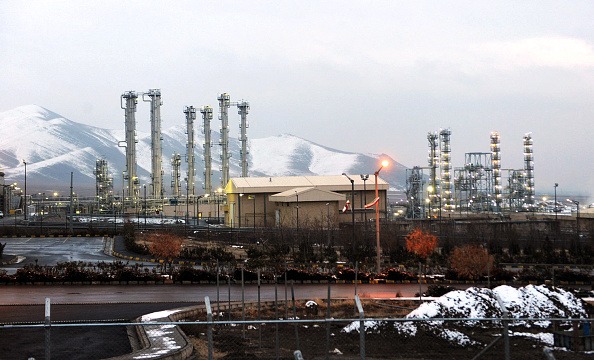
The heavy water nuclear facility near Arak, Iran, on Jan. 15, 2011.
The Israeli military on Friday said it struck an Iranian nuclear facility, coming after Iranian state media reported an attack on its facilities earlier in the day, as warnings of future attacks were issued by Iranian authorities.
The Israel Defense Forces (IDF), in a post on X, said the Arak plant in central Iran was struck and described the facility as a “key plutonium production site” involved in the alleged production of nuclear weapons.
The IDF added that it “will not allow the Iranian regime to continue advancing its nuclear weapons program, which poses an existential threat to Israel and the entire world.”
The Fars news agency, an Iranian state-run media outlet, reported that an official confirmed the attacks on the facility, which is officially known as the Khondab Heavy Water Complex. The facility “was targeted in two stages” by attacks, said Fars, citing Deputy of Political and Security Affairs of Markazi Province Hassan Qamari.
Iranian Foreign Minister Abbas Araghchi said Friday that Israel allegedly struck two of his country’s largest steel factories, a power plant, nuclear sites, and other infrastructure that were hit earlier in the day.
“Israel claims it acted in coordination with the U.S. Attack contradicts POTUS extended deadline for diplomacy. Iran will exact HEAVY price for Israeli crimes,” he wrote on X, referring to President Donald Trump’s statements this week that Washington and Tehran are engaged in talks to reopen the Strait of Hormuz.
On Friday, the Iranian Islamic Revolutionary Guards Corps said its forces would attack U.S. and Israeli interests in the region and also warned employees of U.S. and Israeli industrial companies to evacuate, according to Fars.
The war has spread across the Middle East and has caused significant disruptions to energy supplies, hitting the global economy amid soaring oil, gas, and fertilizer prices, as the Strait of Hormuz has effectively been closed down since the start of the conflict on Feb. 28.
Stock markets also dropped on Friday, while the Brent crude oil benchmark topped $112, having risen more than 50 percent since the war began. Inside the United States, the average price for a gallon of gasoline stood at around $3.97, according to the American Automobile Association.
When asked about the duration of the war and whether the U.S. military would send ground forces to Iran, Secretary of State Marco Rubio indicated that the conflict would not be protracted and no troops would need to be deployed on the ground.
“This is not going to be a prolonged conflict,” he told reporters after meeting with the Group of Seven nations on Friday, adding that the Trump administration has “been as clear as you can possibly be” about the war’s objectives since the start.
The U.S. military is going to “destroy their factories that make missiles, rockets, and drones,” the Iranian military’s navy, missile launchers, and air force, Rubio added.
The U.S. Central Command (CENTCOM), in a Friday update, also said U.S. forces are continuing to strike inside Iran and have eroded the country’s capacity to project military power outside its borders.
Before the conflict erupted, Washington and Tehran were engaged in talks in February over Iran’s nuclear program. Trump has long said that Iran cannot obtain a nuclear weapon and has said that the country was close to producing one.