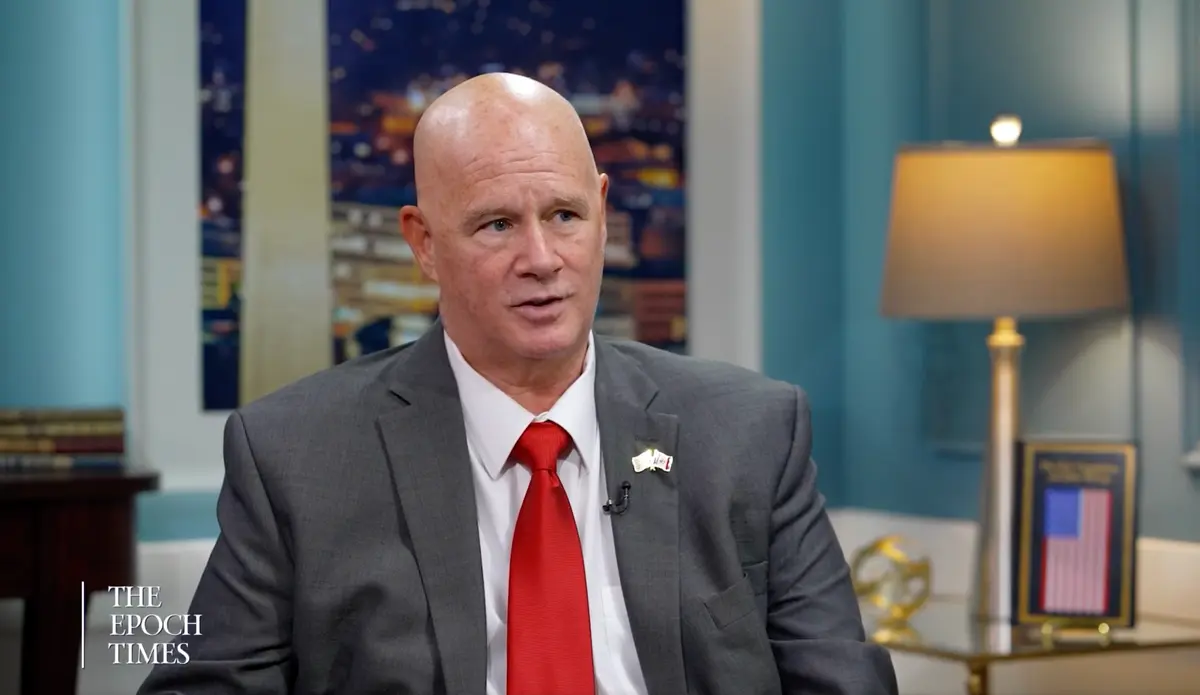
RCMP and Canadian military intelligence veteran Scott McGregor speaks during an interview on “American Thought Leaders,” hosted by Jan Jekielek, a senior editor at The Epoch Times, on May 26, 2026. The Epoch Times
RCMP and Canadian military intelligence veteran Scott McGregor says Ottawa’s new “strategic partnership” with Beijing undermines more than a decade of efforts by Canada’s intelligence and security community to raise awareness about the risks posed by the Chinese Communist Party.
McGregor, who served for 20 years in the Canadian Armed Forces and later worked as an intelligence adviser to the RCMP, said the federal government’s shift in its approach to China came as a “shock” and has been disheartening for those who have spent years warning policymakers about Beijing’s influence and security threats.
“It came as quite a shock, having briefed and presented to every intelligence agency in the United States, all of the agencies in Canada for over a decade about the threat from the CCP [Chinese Communist Party],” McGregor said during an interview with Jan Jekielek, senior editor and host of The Epoch Times’ “American Thought Leaders.”
“The fact that we’ve engaged in this strategic alliance undermines a lot of that work and it cuts the legs out of the people that have been trying to bring awareness to the threat of China to Canada and North America.”
McGregor noted that, before the current government’s recent push to develop closer ties with Beijing, there had been growing awareness among Canadians of “just how infiltrated Canada is” by the CCP, pointing to concerns such as money laundering and foreign interference.
The previous Liberal government under Justin Trudeau had scaled back engagement with China following the Meng Wanzhou affair. In 2018, Canada arrested the Huawei executive on a U.S. extradition request related to fraud charges. Shortly afterward, China detained Canadians Michael Kovrig and Michael Spavor for more than 1,000 days in apparent retaliation.
Following this development, the Trudeau government took a series of actions to protect the Canadian economy against Chinese industrial takeovers and espionage, including banning Huawei from the 5G wireless infrastructure.
Later in his term, Trudeau called for a public inquiry into foreign interference after leaked intelligence depicted widespread meddling by Beijing. The Foreign Interference Commission concluded that China is the “most active perpetrator of foreign interference” targeting Canada.
While Prime Minister Mark Carney called China the biggest security threat to Canada during the 2025 election campaign, his government has since made efforts to increase ties with Beijing in a bid to diversify trade away from the United States amid tariffs imposed by the Trump administration.
Carney visited China in January and declared Ottawa and Beijing were in a “strategic partnership” and that relations between the two countries had entered “a new era.”
When Carney took office as prime minister, there was a “shift,” McGregor said, noting that some Canadians began viewing the United States as more of a threat to Canada than China.
“Suddenly China didn’t look so bad,” he said. “I’m not sure exactly where that sentiment comes from, but it’s disarming the people that have been trying to raise awareness around the CCP threat.”
McGregor also argued that allowing greater economic engagement with China could create a conflict of interest in Canada’s foreign policy, as Ottawa continues to support Ukraine while Beijing maintains close ties with Russia.
Ottawa’s shift in its approach to relations with Beijing comes after decades of warnings about China’s infiltration in Canadian affairs, McGregor noted.
He pointed to Canada’s 1997 Sidewinder Report and the U.S. Operation Dragon Lord that followed shortly after, both of which sounded early alarms about Chinese tycoons infiltrating Canada economically and politically through organized crime, money laundering, and influence operations.
Canada-US Ties
McGregor said Canada and the United States share a deeply integrated, “symbiotic” security relationship. Drawing on his military experience, he pointed to instances in which U.S. helicopters rescued Canadian troops in terrain inaccessible to Canadian aircraft, American forces supplied weapons to Canada, and U.S. naval vessels provided fuel and other logistical support to Canadian ships.
“Canada’s relationship [with the United States] is extremely important in terms of security, and economic security is national security,” he noted.
Senior Canadian officials have said that security cooperation between Canada and the United States has remained robust, even as diplomatic tensions over trade have persisted between the two nations.
When it comes to relations with China, McGregor said the threat is “so much greater,” adding that Canada is “attacked every day by the Chinese,” including through malicious cyber activity, infiltration of Canadian institutions, threatening diaspora, and elite capture.
“We have to find a way to bring awareness again to the real threat, which is China, and not the United States,” McGregor said, adding that Canada “needs the United States” to help it remove threats by the CCP because Canada is constrained by legislation and by its military capabilities.
McGregor also noted that the United States needs Canada in defence of North America because “Canada’s infiltration by the CCP is not something the United States wants on its border.” Without Canada, he said the CCP becomes an “existential threat.”
“Should Canada take further steps with the CCP, we don’t know where that could go—from Chinese boots on the ground to munitions, to that military-type support. That’s a bigger concern, I think, for the United States than the hybrid warfare piece at this moment,” he added.
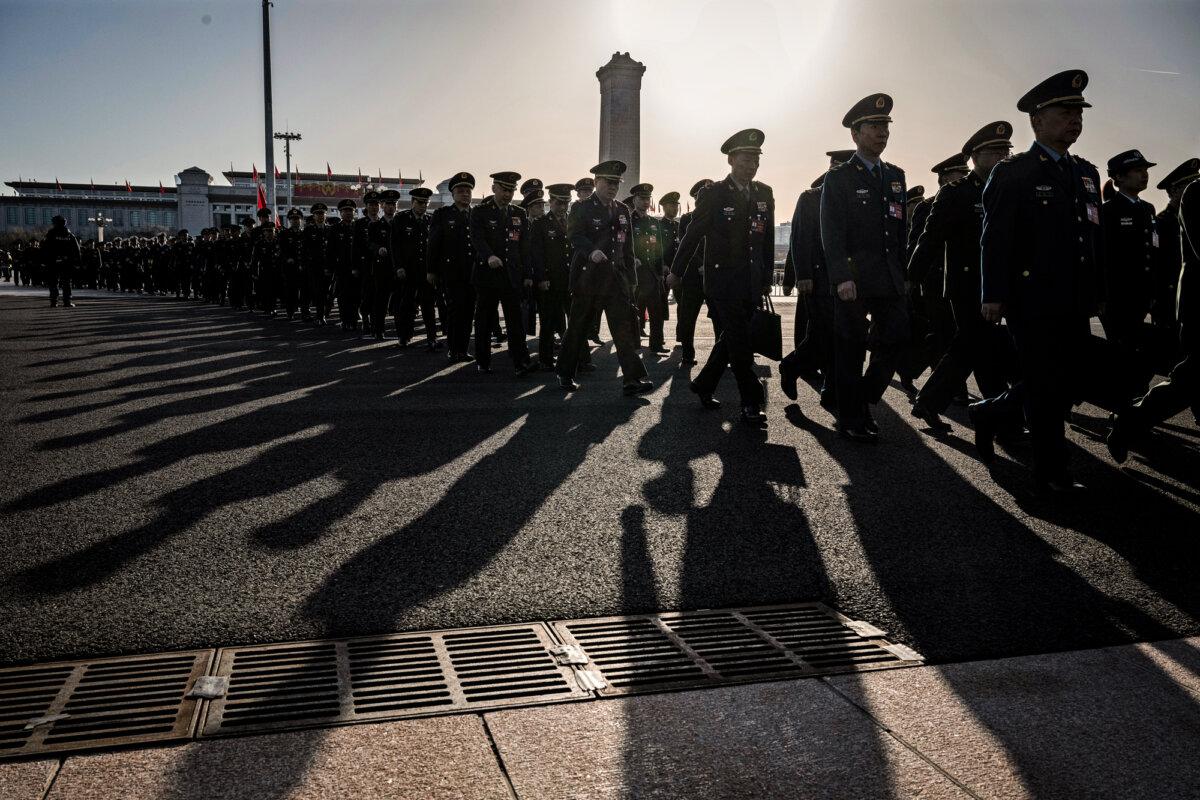
Chinese military delegates arrive at the second plenary session of the National People’s Congress at the Great Hall of the People in Beijing on March 8, 2024. Kevin Frayer/Getty Images
Meanwhile, McGregor argues, China’s objective is to disrupt Canada-U.S. ties and create division between the two countries.
McGregor said the “best-case scenario” for Canada is to regain unity with the United States, as Canada relies on the United States to detect, deter, disrupt, and enforce when it comes to foreign interference.
“We’re not putting people away for foreign interference in Canada. We’re seeing it in the United States extensively. And the infiltration into organizations, corporations—the United States identifies it and says this is an existential threat as well, and they’re doing something about it,” he said.
A former Chinese intelligence agent, who defected to Australia in 2023, previously told The Epoch Times that the United States has “far more robust intelligence and counterespionage” capabilities than Canada does, giving the CCP “more room to operate” in Canada.
While the Canadian government appointed former B.C. chief electoral officer Anton Boegman as Canada’s first foreign influence transparency commissioner in March, the long-awaited foreign influence registry has yet to become operational, even though Parliament passed legislation in June 2024 that enabled its creation.
Noé Chartier contributed to this report.