David Eby resigns as NDP leader after losing in the snap election he called on Sept. 22.
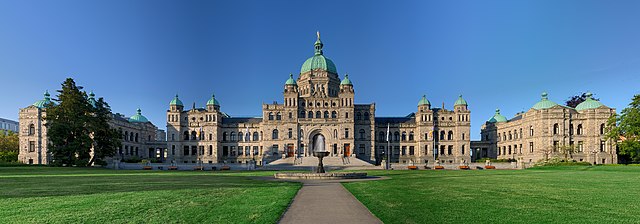
The B.C. Conservatives have won a majority government in British Columbia’s Oct. 24 election, ending the NDP’s nine-year tenure in power.
The win propels Lorne Doerkson into the premiership just over a month after he was selected as interim leader of the B.C. Conservatives. Party executives have said the rules will be amended so that Doerkson can permanently remain as leader once he becomes premier.
“We will welcome capital back to our province,” Doerkson said in his victory speech, listing items from his party’s campaign.
The premier-designate said he will cut red-tape, triple natural gas production by 2035, build more ports and rail to increase export opportunities, increase energy supply, cut taxes, improve health care, strengthen public safety, and protect private property rights.
“I believe in energy,” he said. “I also believe in the protection of private property rights, and a British Columbia where parks are open to all British Columbians,” he added, in an apparent reference to the NDP government making the Joffre Lakes Provincial Park open only to First Nations members during certain periods.
“And to our First Nations, this future is one that we will build together as partners with the certainty all of us need,” he said.
As of the morning of Oct. 25, the Conservatives had won or were leading in 64 ridings, the NDP had won or were leading in 27 ridings, and the Greens had won or were leading in two ridings. B.C.’s legislature has 93 seats, meaning a minimum of 47 seats is needed to form a majority government.
Eby Steps Down as NDP Leader
Premier David Eby, who called the snap election on Sept. 22 with more than two years left in his term, said he takes full responsibility for the NDP’s loss and announced that he is stepping down as leader.
At the outset of the campaign, Eby framed his early election call as a bid to respond to U.S. President Donald Trump and his policies toward Canada. Later in the campaign, the NDP placed greater emphasis on the need for stability, citing its narrow majority as the reason for calling the election. Just ahead of election day, Eby said he regretted not making this clearer earlier in the campaign.
Eby said he called Doerkson to wish him well as the province’s next premier.
“I wished him the best, and quite sincerely,” he said. “This is a critical time for our province and for our country, and I hope for all British Columbians that he protects British Columbians, looks after us, and looks after the province.”
Eby became premier in 2022, succeeding the late John Horgan, who had been premier since 2017, when the NDP first defeated the B.C. Liberals to form government.
Eby won in his own riding of Vancouver-Point Grey in the Oct. 24 election.
Premier-Designate Doerkson
The Conservatives entered the campaign with Doerkson having just been appointed interim leader, replacing former leader Kerry-Lynne Findlay. She stepped down after multiple MLAs left the Conservative caucus over disputes with her leadership.
Findlay congratulated Doerkson on his victory on Oct. 24.
“I am hopeful that under his leadership British Columbians will see the changes to how our province is governed that I, and so many others, have long advocated for,” she said on social media.
Doerkson is a former newspaper publisher who was first elected as an MLA with the B.C. Liberals in 2020, before the party was renamed BC United. He was the third MLA to cross the floor to join the B.C. Conservatives in 2024, citing the party’s failure to reach an agreement on cooperation as the reason.
The victory marks the first time the B.C. Conservatives have won an election since 1928. The party was recently revived from the fringes of B.C. politics, becoming the Official Opposition in 2024 under the leadership of John Rustad. He stepped down as leader late last year amid party infighting, and decided not to seek re-election this year.
Doerkson won his own riding of Cariboo-Chilcotin in the Oct. 24 election.
Prime Minister Mark Carney also congratulated Doerkson on his election win.
“I look forward to working with you as Premier to get more homes built, unleash our full potential as an energy superpower, and build a stronger British Columbia and a stronger Canada for all,” Carney said on social media, while thanking Eby for his service.
Green Leader Lowan Wins Seat
The election also saw Green Party Leader Emily Lowan win a seat in Saanich North and the Islands for the first time. The area is a Green Party stronghold both provincially and federally, with the federal riding represented by Green Party Leader Elizabeth May. It was most recently represented provincially by former Green MLA Rob Botterell, who decided not to seek re-election.
OneBC Leader Dallas Brodie and CentreBC Leader Elenore Sturko, who are both former B.C. Conservative MLAs, didn’t win in their ridings.
On paper, the legislature was dissolved with 47 New Democrats, 29 Conservatives, two Greens, 13 Independents, and two vacant seats. However, the Conservative bench was closer to 37 members, since most of those listed as Independents rejoined the party under Doerkson.
Throughout the campaign, the leading parties clashed over tax policies and the affordability and housing crisis, as well as past comments made by candidates.
The NDP’s platform included implementing a higher tax rate for those earning above $1 million to increase provincial revenues to help with health care, applying a price cap on certain grocery items, and streamlining licensing for internationally trained doctors.
The Conservatives campaigned on promising not to increase taxes, proposing tax cuts, scrapping SOGI from schools, and removing the Declaration on the Rights of Indigenous Peoples Act, which the party says has created uncertainty in property rights.
Elections BC had said ballots cast on Oct. 19 would be tallied by hand. The province used electronic tabulators in 2024, but Elections BC said the tight timelines in this year’s snap election made it difficult to have the machines ready in time.
Advance polls saw 891,000 ballots cast, accounting for roughly a quarter of registered voters.
Elections BC has said that mail-in and absentee ballots won’t be counted for around two weeks, adding that the time is needed to ensure voter eligibility and making certain that no voter cast a ballot more than once. This could mean that in close races, it may take longer to determine the results.