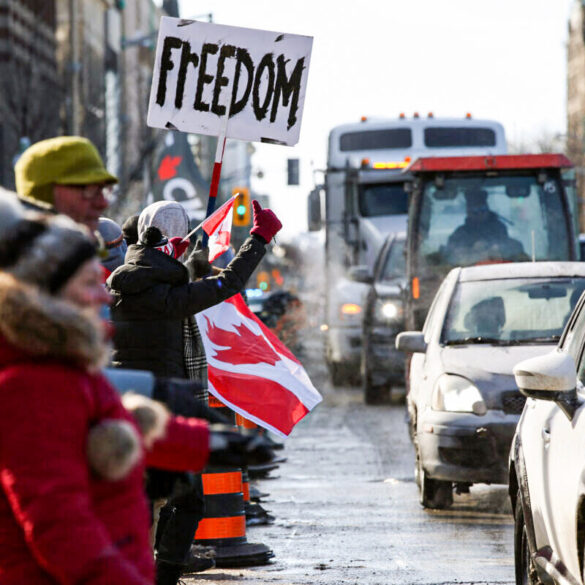
Supporters of the Freedom Convoy protest against Covid-19 vaccine mandates and restrictions in front of Parliament of Canada in January 28, 2022 in Ottawa, Canada. (Photo by DAVE CHAN/AFP via Getty Images)
Prime Minister Justin Trudeau told Ontario Premier Doug Ford on Feb. 9 that additional legal authorities were not needed to clear the Ambassador Bridge blockade in Windsor, a few days before his government invoked the Emergencies Act.
“First of all, they’re not a legal protest. They’re occupying a municipal street and are not legally parked. You shouldn’t need more tools – legal tools – they are barricading the ON [Ontario] economy and doing millions of damage a day and harming people’s lives,” Trudeau told Ford according to a transcript of the call entered as evidence at the Emergencies Act inquiry on Nov. 8.
Trudeau was answering to Ford who had said that the blockade in Windsor compared to the Ottawa Freedom Convoy protest was the “bigger one for us and the country.”
“What we can recommend and what we can work together on is that I’ve asked our AG [attorney general] to look a legal ways to give police more tools and exhaust legal remedies because police are a little shy and I can’t direct them,” Ford said.
Ford went on to declare a state of emergency in the province on Feb. 11.
Protesters started blocking the Ambassador Bridge in Windsor on Feb. 7, as protests were occurring across the country in solidarity with, and holding similar demands to, the Freedom Convoy in Ottawa, such as the lifting of COVID-19 restrictions.
Windsor police, with the assistance of other forces including the OPP and the RCMP, cleared the blockade on the night of Feb. 13, before the Trudeau government invoked the Emergencies Act on Feb. 14.
Even though the act was not used to clear the bridge blockade, Public Safety Minister Marco Mendicino asked Windsor Mayor Drew Dilkens to express support for the act in a text message entered as evidence at the inquiry.
“To the extent you can be supportive of any additional authorities that gets Windsor the resources you need to keep the bridge open, people safe, that would be great,” wrote Mendicino.
Dilkens testified before the inquiry on Nov. 7 and was asked by the commission counsel what he understood Mendicino meant.
“I think he’s saying … if you could express what was happening on the ground that would help justify this, that would be helpful to us,” said Dilkens.
No Other Law
About a week after telling Ford laws on the book were sufficient to clear the Windsor blockade, Trudeau told MPd on Feb. 17 that existing laws were not enough to deal with the “illegal blockades and occupations.”
“We did it to protect families and small businesses, to protect jobs and the economy. We did it because the situation could not be dealt with under any other law in Canada. We did it because that is what responsible leadership required us to do,” Trudeau said in the House of Commons to defend invoking the Emergencies Act.
Mendicino has also said that the invocation was done at the recommendation of police, but every police chief from the services involved in dealing with the events have denied recommending it.
Senior police officers who testified before the inquiry so far have said the act was not necessary to clear the Freedom Convoy protest, though some of the tools provided had been useful.
Trudeau is expected to testify before the commission in the coming weeks, meanwhile Ford went to court to avoid doing so. A federal court judge ruled on Nov. 7 that Ford will not have to testify due to having immunity provided by parliamentary privilege.