Iran has rejected Trump’s surrender demands, vowed to continue resisting, and apologized to Gulf neighbors after Tehran’s strikes hit regional targets.
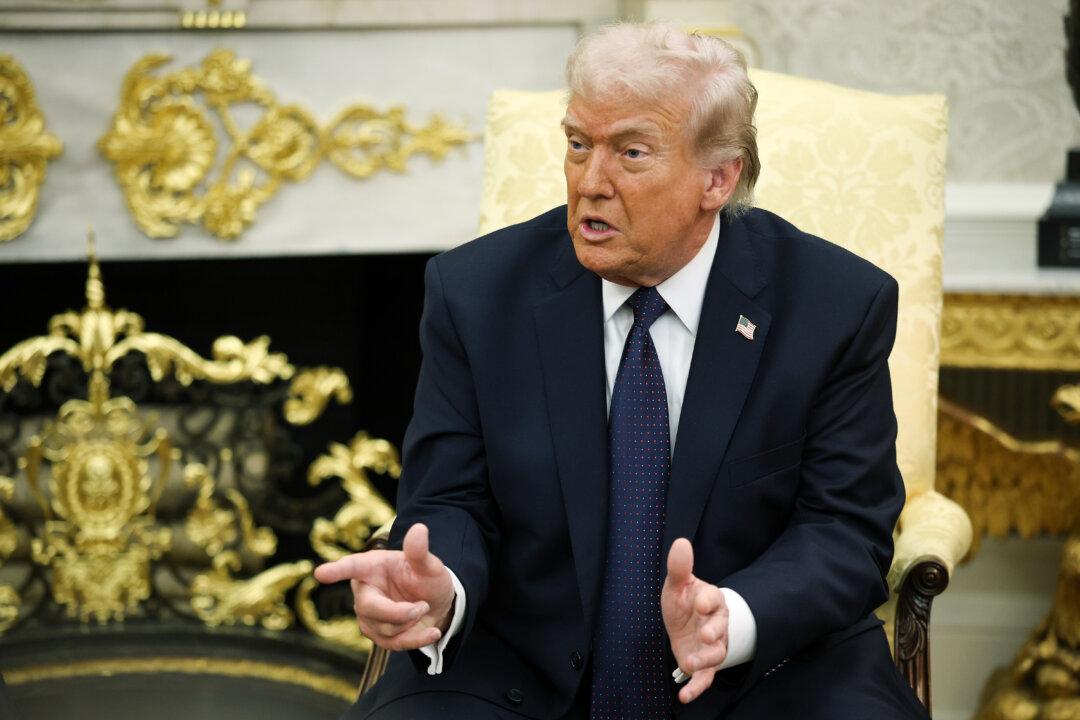
President Donald Trump speaks during a bilateral meeting with German Chancellor Friedrich Merz in the Oval Office of the White House in Washington, on March 3, 2026. Win McNamee/Getty Images
President Donald Trump said Iran would be hit “very hard” on March 7, signaling a potential intensification of U.S. military strikes after Tehran rejected his demand for unconditional surrender.
In a post on Truth Social, Trump said the United States was considering expanding its list of targets as the war with Iran entered its second week.
“Iran, which is being beat to hell, has apologized and surrendered to its Middle East neighbors,” Trump wrote. “Today Iran will be hit very hard.”
He added that additional groups and areas inside Iran were now “under serious consideration” for targeting and “certain death.”
The remarks came after Iranian President Masoud Pezeshkian rejected Trump’s call for Tehran’s capitulation, calling the demand a “dream” and vowing that Iran would not surrender.
In a prerecorded address broadcast on Iranian state television on March 7, Pezeshkian said the country would continue resisting attacks by the United States and Israel.
Iran’s enemies “must take their dream of the Iranian people’s unconditional surrender to their graves,” Pezeshkian said.
Pezeshkian also said that Iran’s temporary leadership council had approved the suspension of attacks against neighboring countries unless an attack on Iran came from those countries.
“I personally apologise to neighbouring countries that were affected by Iran’s actions,” he said. “Our commanders, leaders, and loved ones lost their lives due to the brutal aggression that took place, and our armed forces are heroes who gave their lives to defend our territorial integrity.”
Pezeshian’s apology came as Iran continued to launch attacks in the region in response to U.S.-Israeli strikes. Earlier in the day, a wave of Iranian missiles and drones targeted a major Saudi oil facility, sent people fleeing for cover multiple times in Bahrain, and disrupted flights at Dubai International Airport.
Multiple Gulf countries—including the United Arab Emirates, Kuwait, Qatar, Bahrain, and Saudi Arabia—have reported missile or drone attacks during the past week.
Iranian officials say the strikes were aimed at U.S. military facilities operating from those countries rather than the states themselves.
Trump has said the joint U.S.-Israeli operation, launched on Feb. 28, intends to prevent Iran from acquiring nuclear weapons and threatening America’s national security.
Iran has described the attack as an unjustified act of aggression while negotiations were taking place around Tehran’s nuclear program, which it insists was non-military.
Next Phase of Operation Epic Fury
U.S. military officials have said the campaign against Iran is now entering a new stage focused on dismantling the country’s missile production capabilities.
Adm. Brad Cooper, head of U.S. Central Command, told reporters at a March 5 briefing in Washington that the next phase of the operation aims to destroy Iran’s ability to rebuild its ballistic missile arsenal.
“We’re not just hitting what they have—we’re destroying their ability to rebuild,” Cooper said. “As we transition to the next phase of this operation, we will systematically dismantle Iran’s missile production capability for the future.”
According to Cooper, Iran’s combat capacity has already been significantly degraded since the start of the war.
Ballistic missile attacks by Iran have declined by about 90 percent and drone attacks by roughly 83 percent, he said.
Israel has also reported extensive strikes against Iranian military infrastructure.
Israel Defense Forces Chief of Staff Lt. Gen. Eyal Zamir said Israeli forces have carried out about 2,500 strikes since the beginning of the conflict.
Those attacks destroyed approximately 80 percent of Iran’s air-defense systems and more than 60 percent of its ballistic missile launchers, Zamir said.
“After completing the surprise strike phase, in which we established air superiority and suppressed the ballistic missile array, we are now moving to the next phase of the operation,” he said.
Meanwhile, tanker traffic through the Strait of Hormuz—a strategic waterway through which roughly one-fifth of the world’s oil supply normally flows—has sharply declined amid the fighting.
The shipping route has become a focal point of global economic concerns. Qatar Energy Minister Saad al-Kaabi recently warned that disruptions in the region could trigger a severe global energy crisis.
If tankers and other vessels are unable to pass through Hormuz, oil prices could rise to $150 a barrel within two to three weeks, al-Kaabi told the Financial Times on March 6.
“This will bring down the economies of the world,” he said, adding that supply disruptions could trigger factory shutdowns and shortages of key goods.
QatarEnergy, the world’s largest liquefied natural gas producer, has already halted liquefied natural gas production and declared force majeure on some shipments due to the conflict.
Vessel-tracking platform MarineTraffic said tanker traffic in the region had dropped by roughly 90 percent.
Despite the economic fallout and growing international concern, Trump signaled that U.S. military operations could expand further unless Iran agrees to surrender.
“Iran is no longer the ‘Bully of the Middle East,’” Trump wrote in his March 7 social media post, instead labeling Iran the “loser of the Middle East” and saying it would remain so “for many decades until they surrender or, more likely, completely collapse.”