
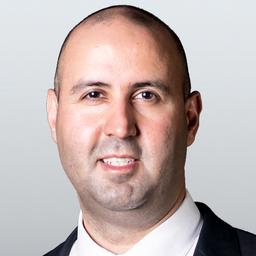
Canadian Conservative Party leader Pierre Poilievre speaks during the National Conservative caucus meeting in Ottawa, Canada on September 12, 2022. – The new leader of Canada’s Conservatives is a right-wing career politician with a flare for zingers who has already boosted party membership, and now he is set to challenge Justin Trudeau in the next election. (Photo by Dave Chan / AFP)
News Analysis
Conservative Party Leader Pierre Poilievre, known for his packed rallies and plainspoken, pragmatic-style public addresses, used his Aug. 18 byelection victory speech in Alberta to outline his party’s agenda in the aftermath of the recent federal election that returned the Liberals to power with a minority government.
Poilievre, whose party’s defeat in the April 28 election was compounded by the loss of his own Ottawa-area seat, struck a comeback tone with the byelection win, saying he “won’t give up.”
Here are key takeaways from his address on the night of the Battle River-Crowfoot byelection, which saw him reclaim a seat in the House of Commons with more than 80 percent of the vote.
Focus Areas
Before former Prime Minister Justin Trudeau said he would step down, and ahead of U.S. President Donald Trump winning the U.S. election, the Tories had been leading in the polls for over a year, with their campaign messaging focused on Trudeau’s policies and removing the carbon tax, and other cost-of-living issues.
With Prime Minister Mark Carney replacing Trudeau and removing the consumer portion of the carbon tax, as well as Trump’s tariffs on Canada and talks of a “51st state,” the Liberals were able to blunt much of the Tories’ campaign messaging and win another minority government in April.
In his Aug. 18 speech, Poilievre set out what his party will be focused on as Parliament returns in September. He also said that the Conservatives will offer solutions and propose policies to resolve the issues of concern he’s focusing on. Many of the issues are a continuation of those the Tories campaigned on previously, but with different degrees of emphasis, while some other issues, such as boosting military spending, were not mentioned, as the Carney government has ramped up defence commitments in recent months.
“Over the last 10 years, Liberal policies have sent crime, immigration, housing costs, inflation spiralling out of control. Now, they promised recently that things would be different, but under Mr. Carney and his 157 days in office, they’ve only gotten worse,” Poilievre said, referring to Carney’s time in office since taking over from Trudeau on March 14.
“We will propose real solutions for safe streets, secure borders, a stronger and sovereign country, with bigger take-home pay for our people,” he said, adding that he would push for policies to allow Alberta to increase its oil and gas production.
Poilievre said his party will push to cap spending and “cut waste” to bring down debt, taxes, and inflation.
While speaking in the rural Alberta riding, Poilievre pointed to the issues of crime facing farmers, saying thieves “are showing up and siphoning gas and stealing copper.”
“More dangerous and violent drug offences are happening everywhere. Conservatives will push for laws that lock up violent offenders, ban drugs, treat addiction, and make our communities safe to raise families, and for seniors to retire,” he said.
The Tory leader took aim at the Liberals’ gun control policies, saying he’ll protect the rights of “lawful, licensed, trained, and tested firearms owners.”
“Having a hunting rifle in rural communities is not just a matter of recreation, it is a way to feed your family,” he said.
The Liberal government has recently banned more than 2,000 types of guns that it terms “assault-style” firearms, saying the bans are needed to ensure community safety.
“These measures will remove dangerous firearms designed for military use from our communities, and help ensure that Canadian families and communities no longer suffer from gun violence,” the government said when announcing the ban.
The Carney government has said it is working with the provinces, territories, and indigenous communities to expedite major projects of national interest to boost the Canadian economy, and is also working to secure the border and increase public safety.
“In all of its actions, the government will be guided by a new fiscal discipline: spend less so Canadians can invest more,” the government said in its throne speech in May.
Immigration, EV Mandates Key Issues
Among the policy areas he touched on, Poilievre spent a relatively longer time on the issues of immigration and electric vehicle mandates, for which the Tories are launching a special campaign to overturn.
Poilievre noted that Canada is a vast and cold country, making transportation a major cost, especially in rural areas such as the Battle River-Crowfoot riding in Alberta that he ran in.
He said the Liberal government’s upcoming electric vehicle (EV) mandate, which requires 20 percent of new vehicles sold by 2026 to be zero-emission vehicles with the number rising to 100 percent by 2035, is a “direct attack on rural life and on the cost-of-living in Canada.”
“It will wipe out our auto sector,” Poilievre said.
The Tories have said they’re launching a “massive nationwide campaign” against the federal EV mandate.
The Liberal government says its EV mandate is needed to meet net-zero emission targets.
“Canadians have been clear: they want clean air, good jobs, and a strong economy,” the federal government says, adding that it’s working on building infrastructure to enable wider adoption of EVs.
Poilievre also honed in on the issue of immigration, saying while his party supports “lawful, orderly” immigration, the Liberal government hasn’t approached the issue in a sustainable way.
“We will secure our borders by putting an end to the Liberal open borders experiment of mass immigration, which has been a disaster,” Poilievre said.
“Over the next several years, we need to … have more people leaving than coming, so that citizens in Canada can afford homes, can find jobs, and health care.”
He said immigration should be done in a way that serves the national interest, letting in “the right people and in the right numbers.”
The Liberal government last year imposed more limits on newcomers, and Carney has said the country needs to cap immigration to allow the building of more capacity before more people are allowed in.
In his mandate letter to cabinet ministers in May, Carney instructed them to attract “the best talent in the world to help build our economy, while returning our overall immigration rates to sustainable levels.”
‘Canadian Sovereignty Act’
Poilievre said when Parliament returns in fall, his party would be proposing a Canadian Sovereignty Act that is meant to boost the Canadian economy.
“This act would legalize pipeline construction, rapid mine approvals, LNG plants, nuclear plants,” he said, making an apparent reference to the Liberal government’s Impact Assessment Act, which requires additional environmental reviews to approve major projects such as pipelines, and which the Conservatives and the province of Alberta have dubbed the “no-more pipelines act.”
“It would get rid of the industrial carbon tax, the EV mandate. It would ensure that Alberta could continue increasing its output of oil and gas. It would pave the way to get pipelines built right across this country. And it would eliminate capital gains tax when you reinvest your profits here in Canada, to bring back hundreds of billions of dollars investment,” he said, repeating some of the campaign items the Tories had pitched in the last election.
Poilievre said Conservatives are willing to work with other parties for the benefit of Canadians, adding that he hopes the Liberal government “will steal” his proposals and adopt the policies as their own, a joke he had also made during the last election campaign, commenting on how some Liberal policies mirrored the Tories.’
Poilievre added that the Liberal government is “losing two trade wars,” noting the challenges with U.S. tariffs as well as China’s new tariffs on canola and other agricultural products.
“U.S. and Chinese tariffs have actually worsened since Mr. Carney got elected, and that was election that he ran on getting a better deal. Conservatives will fight to put Canada first,” he said.
The Liberals have said their recently passed legislation removes federal barriers to internal trade to boost the Canadian economy, and also say the newly passed Building Canada Act will expedite projects of national interest.
“The Building Canada Act will get projects of national interest built by focusing on a small number of executable projects and shifting the focus of federal reviews from ‘whether’ to build these projects to ‘how’ to best advance them,” the government says. The act also allows bypassing certain legislation if they stand in the way of prioritized projects.
The Carney Liberals also say they’re working on diversifying international trading partners and on Canada becoming “an energy superpower in both clean and conventional energies; to restore affordability to housing; and to secure our borders and our communities.”
Comeback
Poilievre set a tone of comeback in his byelection victory speech, which came on the heels of his party’s election loss in the April 28 election, as well as the loss of his own seat to the Liberal rival in Ottawa-area Carleton riding, which he had held for over two decades.
Getting emotional at one point, he recalled the story of meeting a woman who was undergoing cancer treatment while he was campaigning in the Battle River-Crowfoot riding.
“[She] showed up at my town hall in Stettler to tell me to keep going. I say to her, ‘you don’t give up, so I don’t give up,’” Poilievre said.
“I say to all of the people, not just in the great region of Battle River-Crowfoot, but right across this country, to anyone who has been knocked down but has got back up and kept on going, you haven’t given up, so I won’t give up.”
Omid Ghoreishi is with the Canadian edition of The Epoch Times.