(Photo by Erik Mclean / pexels.com)
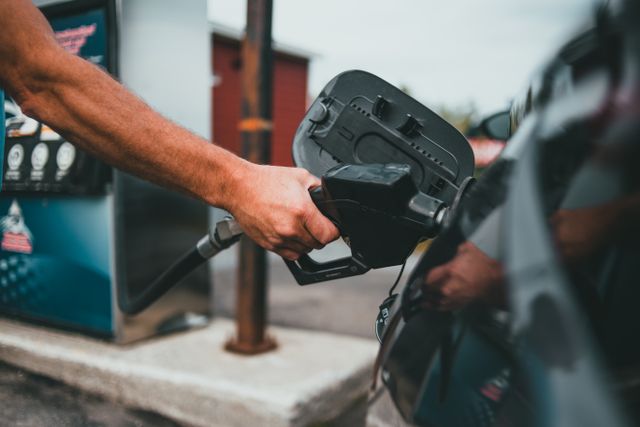
The federal government is extending its suspension of the excise tax on gasoline and diesel until early 2027, after the tax holiday was set to expire on Sept. 7.
The federal fuel excise tax will remain suspended until Jan. 31, 2027, before being reinstated at half its regular rate from Feb. 1 to March 31. It will return to its full rate on April 1.
“This means continued saving of 10 cents per litre on gasoline and unleaded aviation gasoline, and four cents per litre on diesel and aviation fuel,” Finance Minister François-Philippe Champagne told reporters in Ottawa on Sept. 2.
On April 20, the Liberal government suspended the federal fuel excise tax on gasoline, diesel and aviation fuel across Canada until Sept. 7.
The measure was introduced in response to higher energy prices linked to the U.S.-Iran conflict, which disrupted energy markets and led to restrictions on shipping through the Strait of Hormuz, a major global energy transit route. The waterway normally carries roughly one-fifth of global oil and liquefied natural gas shipments. The conflict, which began in late February, initially pushed oil prices sharply higher.
Oil prices later declined as tensions eased, but renewed fighting and uncertainty surrounding the Strait of Hormuz have since pushed prices higher again. West Texas Intermediate crude was trading above US$90 a barrel on Sept. 2.
“Canadians did not cause these global challenges, it’s very clear, but they are feeling the consequences every time they pull up to a gas station, every time groceries are delivered to a store, and every time goods are shipped across the country,” Champagne said.
The federal Conservatives had been calling on Ottawa not to reinstate the federal fuel excise tax on gasoline and diesel, and to eliminate federal taxes on gasoline and diesel for the remainder of the year, saying the move would save Canadians around $20 per tank of gas.
Responding to Ottawa’s announcement, the Conservative Party said in a statement on Sept. 2 that it had “won another battle for Canadian families.” The party said while the extension of the fuel tax suspension was good news, it would “not be enough” for Canadians dealing with the impacts of high inflation.
“That is why Conservatives continue to call for the government to remove all federal taxes on gas and diesel until at least Canada Day, 2027 to save Canadians up to 25 cents per litre,” the party said.
The party added that this would include eliminating the Clean Fuel Regulations, the GST and permanently cancelling the federal industrial carbon price, arguing that these measures contribute to higher costs for food and fuel.
Champagne was asked by reporters about the Conservatives’ latest request and he said the government would take into account “the state of the world” when deciding on future changes to the fuel tax.
“The world is a very volatile place and complex place, but the message I think that people take away today is that we’re there for you, and I think this is a measure which is very targeted, very broad-based,” he said.
Champagne also said reopening the Strait of Hormuz could bring greater “stability” to energy supply chains, but that if this did not occur, Ottawa had the “fiscal capacity” to support Canadians.
Bank of Canada Governor Tiff Macklem said on Sept. 2 that higher oil prices were putting upward pressure on inflation, and that this could force the Bank to raise interest rates. But he said the economic data had so far shown that higher oil prices were not spreading to other components of inflation.
Canada’s inflation rate hit 3.2 percent in May, fell to 2.8 percent in June, and rose again to 3.0 percent in July, according to Statistics Canada.