A controversial test of parenting competency that put many Greenlanders’ kids in foster care was dropped in 2025. But parents and kids remain separated.
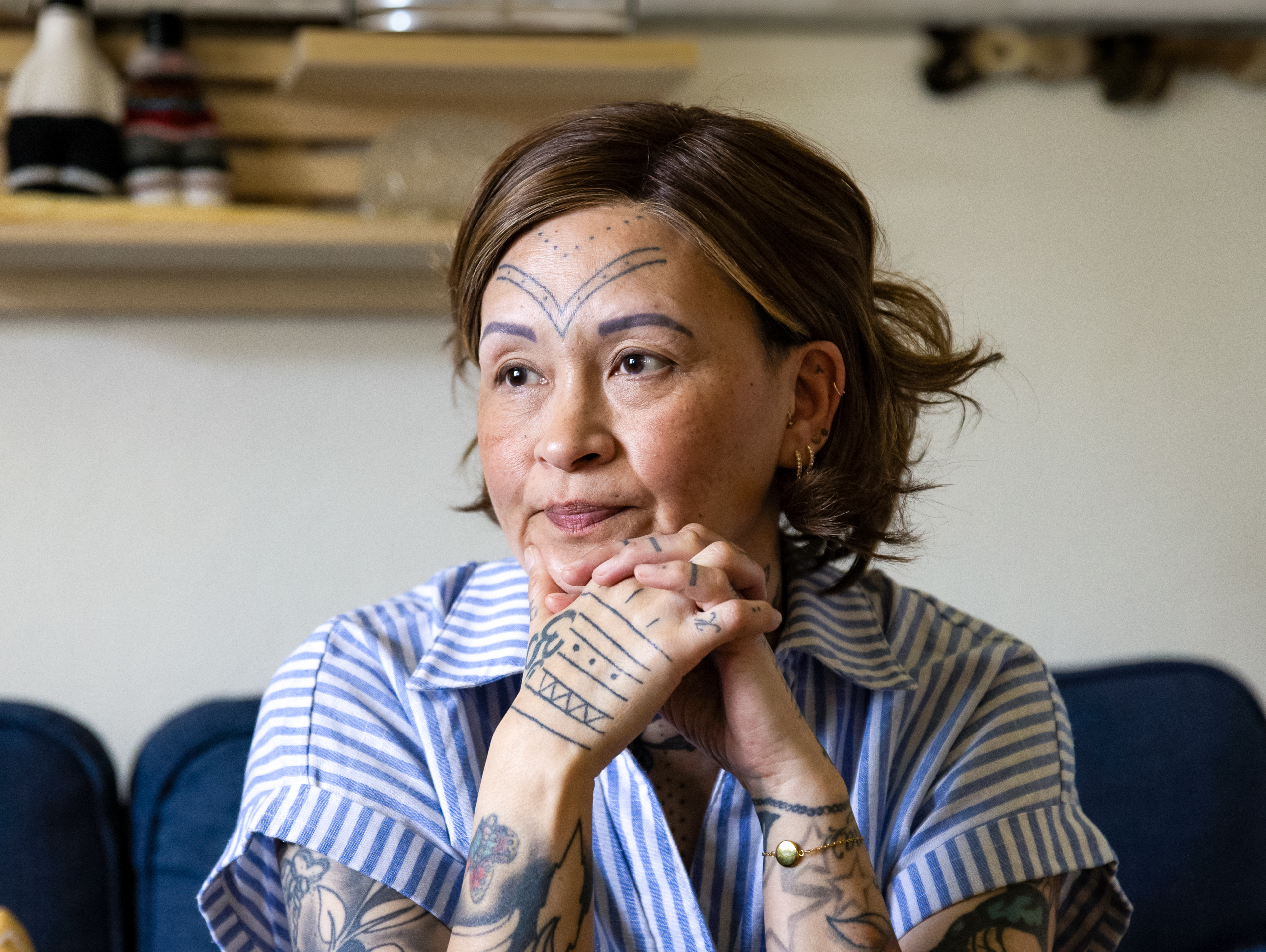
Bea Ferdinandsen Kaas sits in her home outside Aarhus, Denmark, on April 22, 2026. John Fredricks/The Epoch Times
COPENHAGEN, Denmark—Bea Ferdinandsen Kaas held up her phone. The traditional Greenlandic tattoos on her fingers fanned out around the image of a child: her granddaughter.
She’s fighting to be able to raise the young girl, who she says was taken from her daughter by the police and a social worker soon after her birth in early 2025.
“I will always be hopeful, always. But I also know they already got her,” Kaas told The Epoch Times.
She choked up. Kaas—far from the granddaughter she loves—began to weep.
In 2025, Denmark eliminated a controversial parenting competency test for Greenlanders in Denmark. Greenlanders had long complained that the standardized test was culturally biased, causing too many of them to lose their children to foster care.
A year later, although some cases from the era of the parenting test are being slowly reviewed, many families remain separated from their children.
Many forced adoptions have taken place under an outgoing prime minister who advocated more of them in the name of protecting children from abuse and neglect.
U.S. President Donald Trump’s talk of acquiring Greenland has raised the stakes further. That interest has helped to focus global attention on Greenland and an issue that some worry, and others hope, will fuel existing dissatisfaction with Danish rule.
Denmark and Greenland, though deeply intertwined, have a fraught history marked in decades past by the forced “Danization” of some young Greenlanders and a family planning campaign that forced contraception on thousands of Greenlandic women.
A sign signals traffic near a school in Ry, Denmark, on April 23, 2026. John Fredricks/The Epoch Times
Many Greenlanders who spoke with The Epoch Times said they’re worried about American domination, saying the United States’ own record is far from perfect. Others described pressure against speaking positively of the United States or its leader.
Beyond the politics of a world in flux, there is simple, crushing loss—that of the mother who cannot hold her child.
“I miss my boy,” Gudrun Qunerseeq Maratse wrote in a text message to The Epoch Times soon after her infant was taken from her.
The Greenlanders who spoke with The Epoch Times believe the system has failed them. They worry their next generation will grow up deprived of both mothers and their mother language, Greenlandic.
In a country that leads many international rankings of the best places to raise kids, Greenlandic mothers are fighting to be reunited with their children.
Meanwhile, with tensions over the island still high, international authorities and the Danish government are wrestling over the treatment of Greenlandic families.
International Concern
On March 31, three special rapporteurs—independent human rights experts—from the United Nations wrote to the Danish government about the case of Keira Kronvold.
The Greenlandic mother was forcibly separated from two of her children after taking the parenting test in 2014. In 2024, authorities removed a third child, her newborn daughter.
Led by Reem Alsalem, the special rapporteur on violence against women and girls, the authors wrote that they had received accusations of ethnic and gender discrimination in connection with the test.
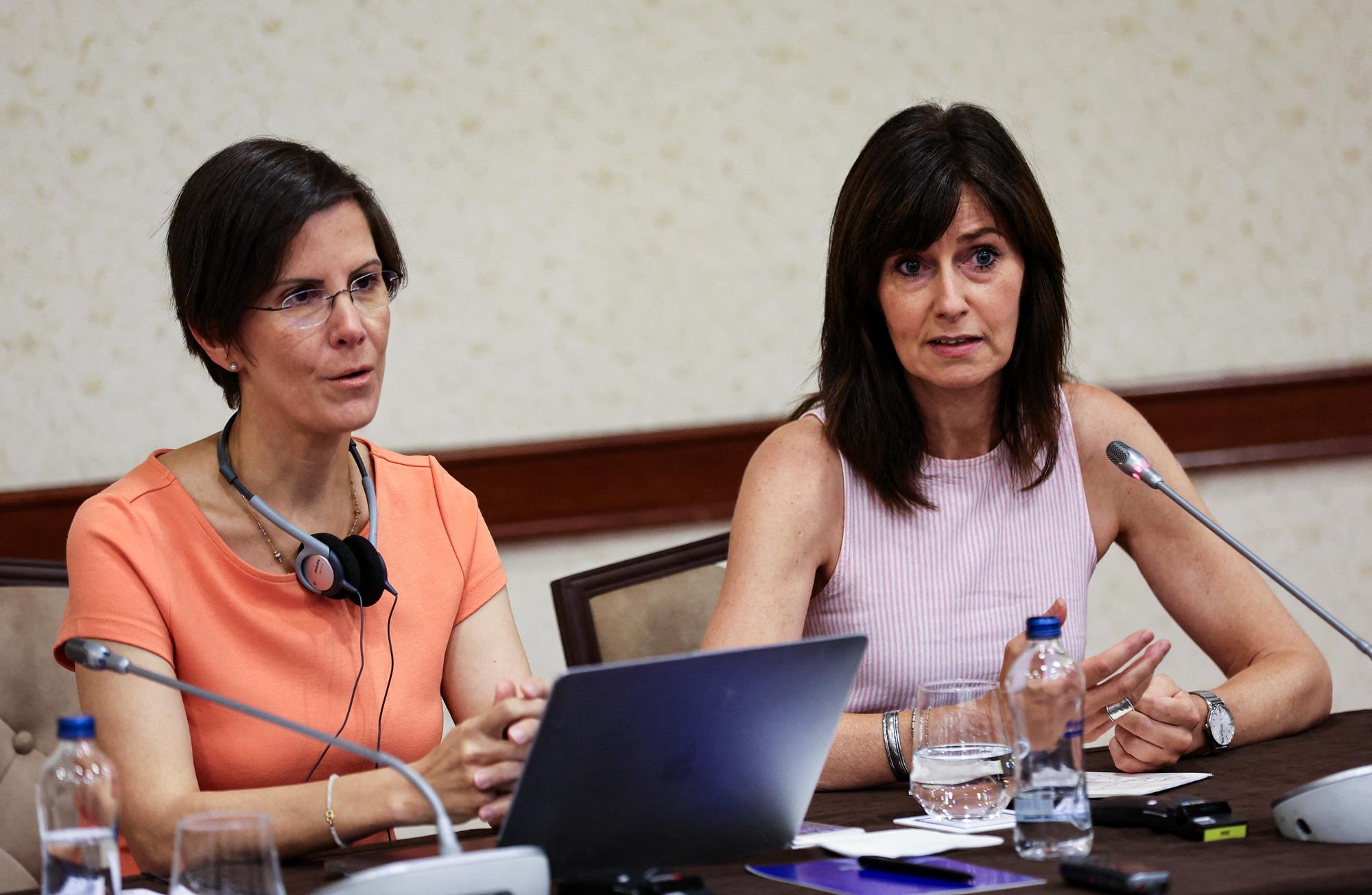
U.N. Special Rapporteur on violence against women Reem Alsalem (L) and U.N. Human Rights Officer Orlagh McCann address a press conference in Ankara, Turkey, on July 27, 2022. Led by Alsalem, three U.N. special rapporteurs said they received allegations of ethnic and gender discrimination tied to Denmark’s parenting competency test. Adem Altan/AFP via Getty Images
They voiced worries about the specialized unit for Greenlanders that has replaced the test, noting that its decisions cannot be appealed. They also sought more detail on the review of cases such as Kronvold’s from before the test was eliminated.
An official from Denmark’s Ministry of Social Affairs and Housing wrote back to Alsalem, saying the agency could not respond comprehensively in writing due to privacy concerns. She asked instead for an in-person meeting to discuss that unit—which is part of VISO, Denmark’s National Knowledge and Special Counseling Organization—and the Kronvold case.
Alsalem told The Epoch Times in an email that she was slated to meet the Danish ambassador on May 8.
Later that same day, a Danish high court ruled Kronvold had been illegally separated from her newborn baby.
VISO has reviewed 16 of 47 cases it received over the past year, finding that the test had yielded misleading results in two instances.
The test, which lasted from 15 to 20 hours, included cognitive questions, personality tests, and in-depth interviews.
Questions that focused on the emotional responses of parents were criticized for showing cultural bias, as Greenlanders often convey their feelings nonverbally rather than through words.
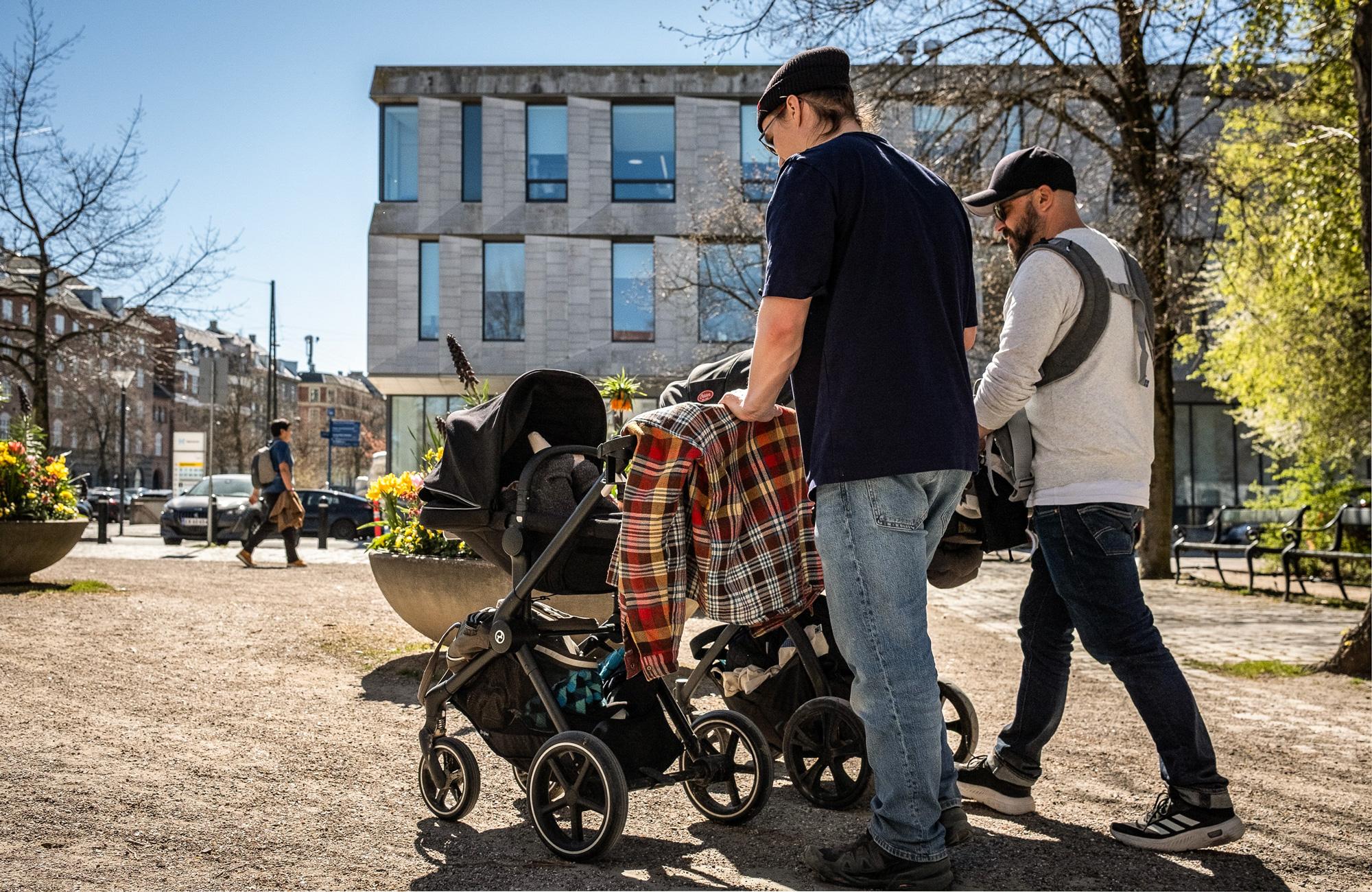
Men push strollers in Copenhagen, Denmark, on April 24, 2026. Greenlanders have long argued that the country’s standardized parenting competency test was culturally biased and led to too many children being placed in foster care. John Fredricks/The Epoch Times
In an email to The Epoch Times, VISO’s Randi Lykou declined to comment in depth, citing the fact that the new Danish government is still being formed after elections in late March. A spokeswoman for the ministry declined to comment, for the same reason, in an email to The Epoch Times.
Jonas Faber, a Greenlandic Inuk activist living in Canada, complained about the limited scope of review in older cases.
“The Danes think they are immune to U.N. human rights criticism, and it is therefore incomprehensible for the Danes to imagine that they ever could be in any human rights violation troubles with the U.N.,” he wrote in an email to The Epoch Times.
Qupalu Nuku Platou is among the Greenlandic mothers who lost children during the era of the parenting test.
Now, roughly a decade later, she’s still seeking to raise her twin boys.

Greenlandic mother Qupalu Nuku Platou speaks with The Epoch Times by phone in Copenhagen, Denmark, on April 23, 2026. Platou, who lost children during the era of the parenting test, is still seeking custody of her twin boys after roughly a decade. John Fredricks/The Epoch Times
For five years, she told The Epoch Times, she was not permitted to speak to her twins in Greenlandic during her brief, periodic visits with them. Today, they don’t know their language, validating the worry other Greenlandic mothers shared with The Epoch Times as their young children start to grow up in Danish homes.
Alsalem’s letter noted that the Greenlandic mothers “have expressed fear that children may lose language and identity.” Faber believes the forcible adoptions amount to ethnic cleansing by U.N. standards.
Like Kaas, Platou feels demoralized—but she hasn’t quit.
“I’m tired,” she said, “but I keep fighting.”
A Broader Pattern
The saga of these Greenlandic mothers is consistent with a broader pattern: Denmark is facing a reckoning over mothers and children. The nation’s aggressive approach to placing children in foster care, including but not limited to Greenlandic children, is facing significant pushback.
One watershed moment in that history was Prime Minister Mette Frederiksen’s 2020 New Year’s address.
In it, she laid out a goal—one that stood out at the time and helped set the stage for what came next.
“More at-risk children need to have a new home, at an earlier stage compared to the way it works today. And the conditions for children placed in foster care must be much more stable,” the Social Democrat said.
“The most important—completely essential for a small child—is to grow up with safety, love, and stability. Therefore, more at-risk children should be given up for adoption to enable them to have a true new beginning.”
Within a few years of that speech, Denmark adopted the “Children First” reform, which enabled involuntary adoptions even prior to birth.
It was part of a series of changes that increased the number of involuntary adoptions that took place in the country.
The way Denmark goes about placing children in foster homes, a system heavily reliant on the actions of local municipalities, is drawing scrutiny from its central government.
Local municipalities take the lead in child welfare in Denmark, carrying out child protection examinations and deciding whether or not children can be forcibly removed from their homes.
In a 2026 analysis, the National Audit Office, an independent agency of the Danish Parliament, found that municipalities violated the law in 69 percent of cases that they examined in which children and young people were placed in an orphanage or foster home or received associated support.
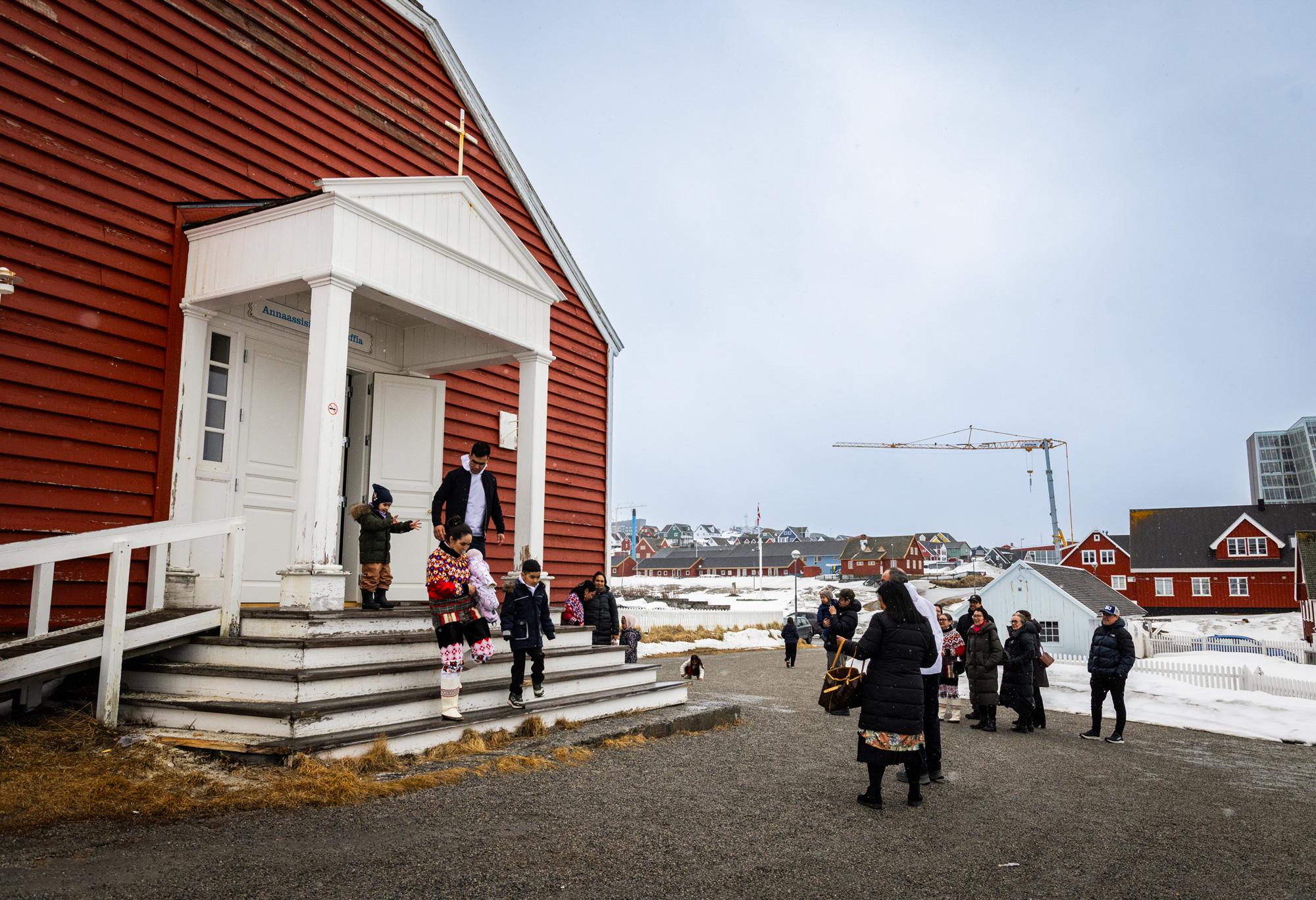
People attend church in the city of Nuuk, Greenland, on May 4, 2025. President Donald Trump has been pushing since 2019 for the United States to incorporate the world’s largest island. John Fredricks/The Epoch Times
Psychologist Karen Littauer told The Epoch Times she sees the case for moving children when child abuse or parental substance abuse are factors.
Yet she thinks too many children of new, young parents are being sent into foster care instead of receiving other assistance or being placed with their grandparents.
Littauer, a former documentary filmmaker who has lived in both Greenland and Denmark, said the Greenlandic are not the only ones suffering from the system.
She has reviewed 120 cases involving the placement of children, to help families challenge those results. Littauer, who works with both children and adults, said she performs those reviews for free.
Fear
In the streets in Aarhus, bicycles rounded corners. In the park, young people chatted and drank Carlsbergs. On the trees, leaves slowly budded—a sign of new life in late April.
Not far away, another Greenlandic mother lost her infant child.
Maratse told The Epoch Times her boy was taken from her at a mother and child house in Denmark’s second-largest city, a long drive from the municipality where she lives.
She claimed the decision was made because of her mentalization—a psychological term for how people think about the thoughts of others.
Maratse alleged that she witnessed many mothers being separated from their children at the facility, an accusation in line with some of its online reviews.
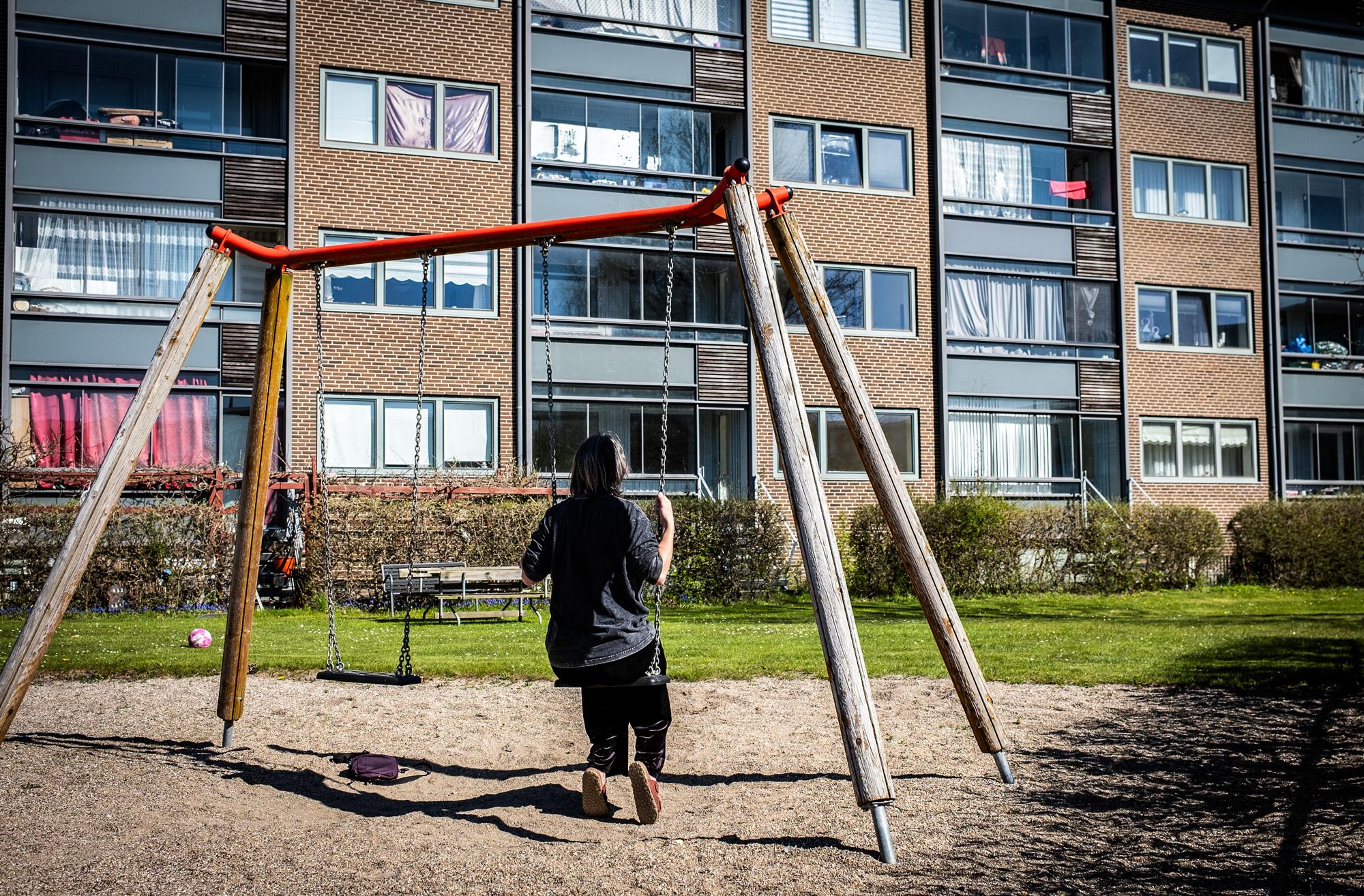
A woman sits on a swing set outside of Aarhus, Denmark, on April 22, 2026. John Fredricks/The Epoch Times
Littauer said cultural differences between Danes and Greenlanders can create misunderstandings when professionals, particularly social workers, assess families. More fundamentally, she does not see the value of parenting tests.
“There are different ways to be a good parent,” she said.
Although Maratse said she had consented to share information about her case with The Epoch Times after her caseworker responded angrily to media scrutiny, neither the facility nor the municipality responded to requests for comment from The Epoch Times.
Three of the municipalities responsible for forcibly adopting Greenlandic children described in this article did not respond to requests for comment.
Maratse voiced fear as she reflected on her situation. Though she wants to leave Denmark, she believes she must stay for the sake of her son.
The discontinued family test and families’ ongoing struggles are not the only things driving anxiety in Greenland.
Many Greenlanders hope to become independent of Denmark. A sometimes vexed history, including the controversial G60 Greenland modernization program and the forcible use of contraceptives on some Greenlandic women during the late 20th century, has fueled distrust. The recent experience of Greenlandic mothers has only amplified that.
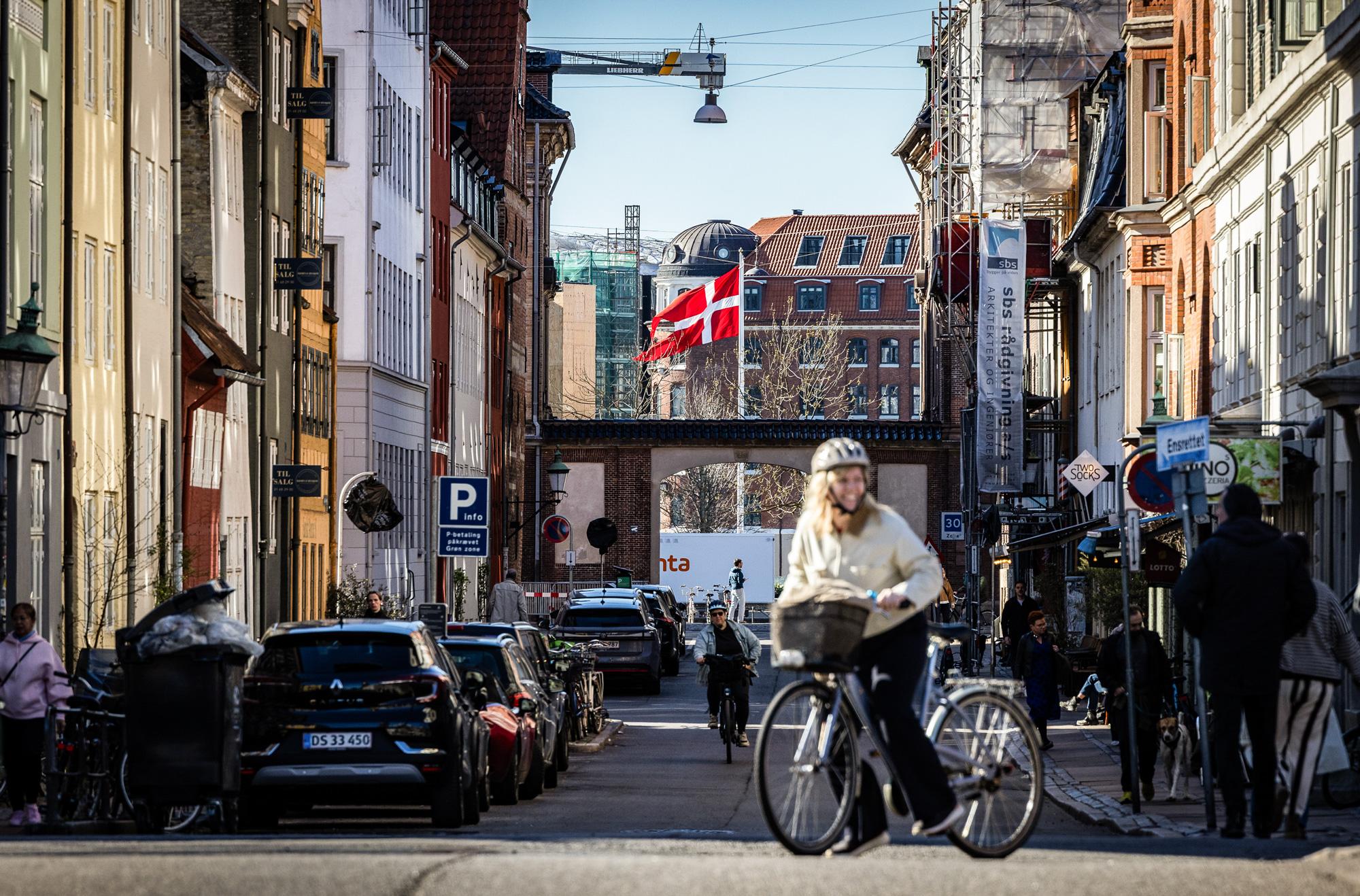
People commute in Copenhagen, Denmark, on April 21, 2026. Qupalu Nuku Platou, who lost twin boys after taking Denmark’s parenting test, said most Greenlanders fear a U.S. takeover but want to find ways to work with the United States. John Fredricks/The Epoch Times
“It’s a bad marriage,” Kaas said, adding that the relationship should have ended long ago.
Her mother was sent to Denmark to learn Danish as a child, she recalled.
Of her mother’s foster family, she said, “They were great.” Yet, now that Kaas is living in Denmark, she thinks too many Danes look down on Greenlanders.
Against that backdrop, Trump’s push to acquire the far northern island, primarily for security purposes, has drawn varied reactions.
When speaking to The Epoch Times in Greenland in 2025, locals expressed everything from fear of an American conquest, to openness to closer economic ties with the United States.
Trump later ruled out using force to take the island, but his interest hasn’t waned.
Danes and Greenlanders, though very different from each other, have gotten to know each other over “many, many, many years” of contact, Littauer said.
The connection between the two nations, though fraying, runs deep. Over 80 percent of Greenlanders have at least partial European ancestry, according to a 2014 genetic study.
Many Danish and Greenlandic politicians, along with some American politicians, have condemned the U.S. president’s talk of taking Greenland, citing, among other things, the United States’ existing ability to scale up its military presence on the island. Trump’s political allies have defended his vision.
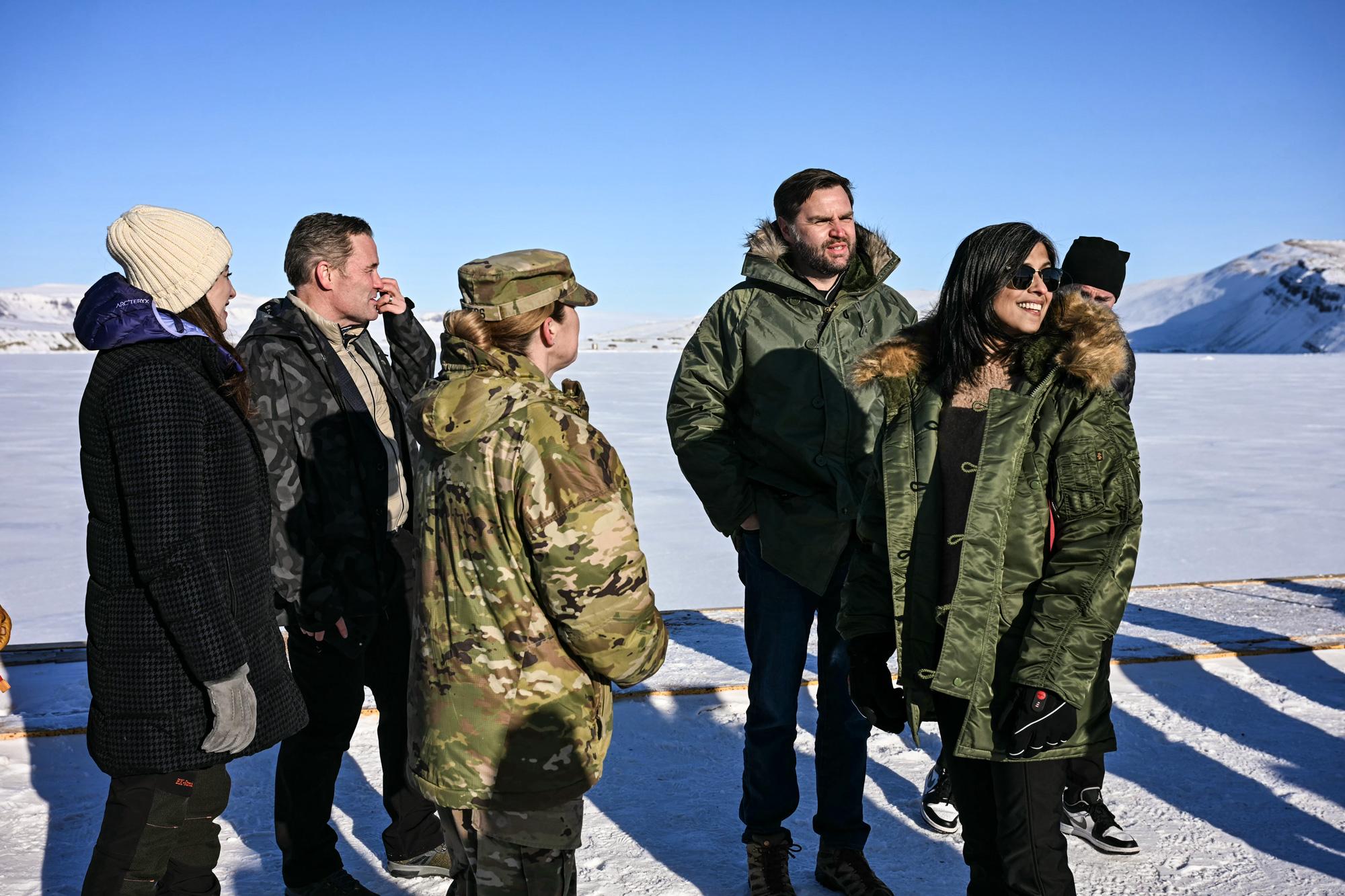
U.S. Vice President JD Vance (2nd R) and Second Lady Usha Vance (R), joined by national security adviser Mike Waltz (2nd L), tour the U.S. military’s Pituffik Space Base in Greenland on March 28, 2025. Jonas Faber, a Greenlandic Inuk activist living in Canada, said Danes fear the United States could use its military presence in Greenland to annex the island. Jim Watson/Pool/Getty Images
Faber sees a longstanding Danish fear at play.
“Since my childhood, the Danes have been nervous and afraid of the United States using its military bases on Greenland to annex Greenland,” he said.
Greenlandic media publicized The Epoch Times’ trip to Denmark before it began. An article characterized the publication as “MAGA media” and warned that Greenlandic mothers who spoke with its journalists would risk fueling a political narrative.
Littauer opposes American ambitions to claim Greenland, saying it would take the United States a long time to understand the culture.
“It’s not something you can read in a book,” she said.
Kaas said she had never felt threatened by Trump’s rhetoric, attributing others’ fear to Danish media influence.
“We are [such a] small community,” she said of the pressure to oppose the U.S. president.
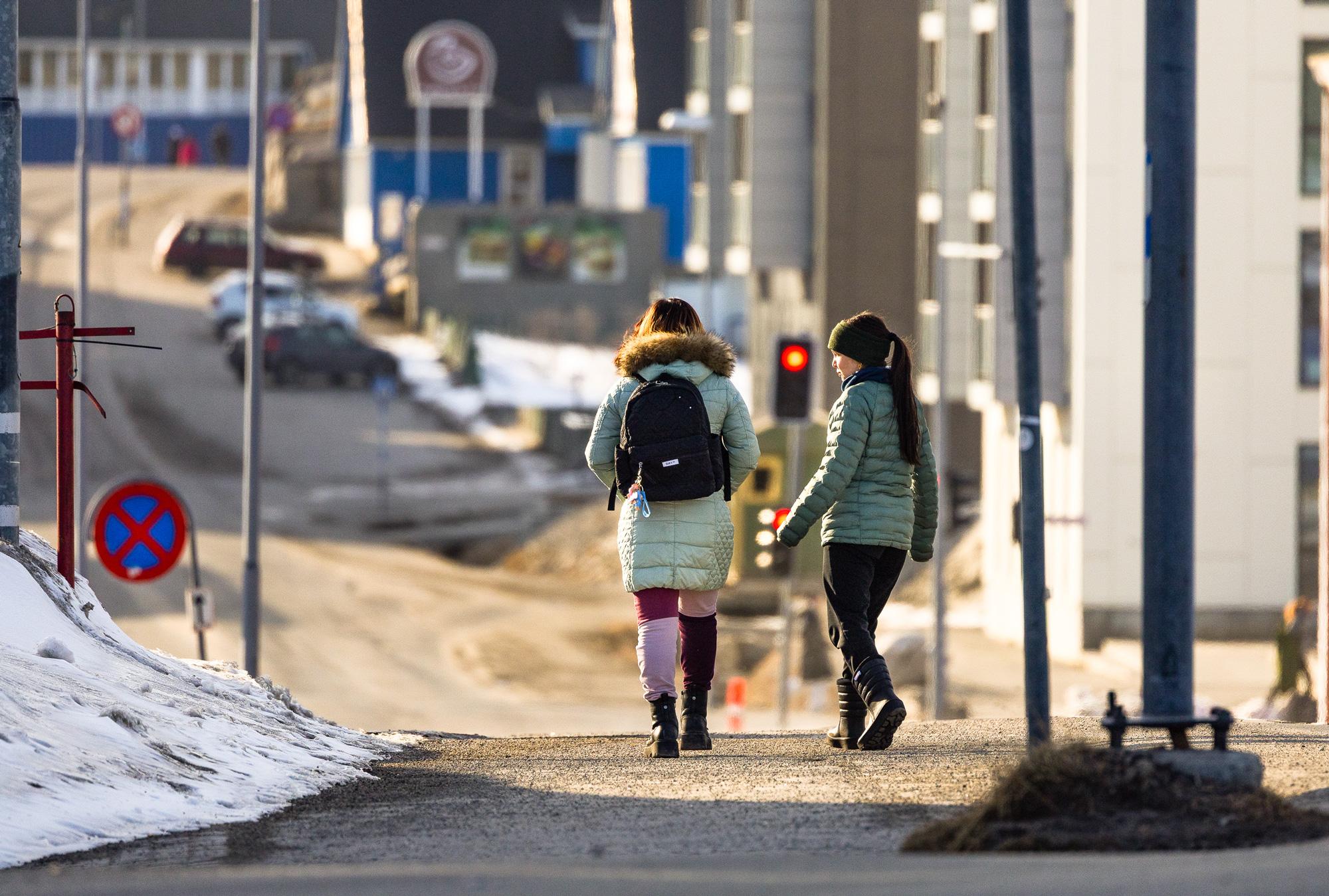
People walk the streets of Nuuk, Greenland, on May 3, 2025. John Fredricks/The Epoch Times
While she hopes the United States can have a direct dialogue with Greenland that is not mediated by Denmark, she said the country’s large annual grant to Greenland gives it leverage.
Greenland, a territory of fewer than 60,000 people scattered across hundreds of miles of coastline, also relies on Denmark for hospitals and other infrastructure.
One Greenlander who strongly supports the United States is activist Jorgen Boassen. The Trump advocate told The Epoch Times he hopes the U.S. president will do something about the cases of the Greenlandic mothers.
Platou struck a more cautious tone. She said most Greenlanders fear an American takeover.
“We can recognize it when people try to control us, even if you’re from another country,” she added, saying Greenlanders had learned from the experience of Danish rule.
Yet she thinks Greenlanders want to find ways to work together with the United States.
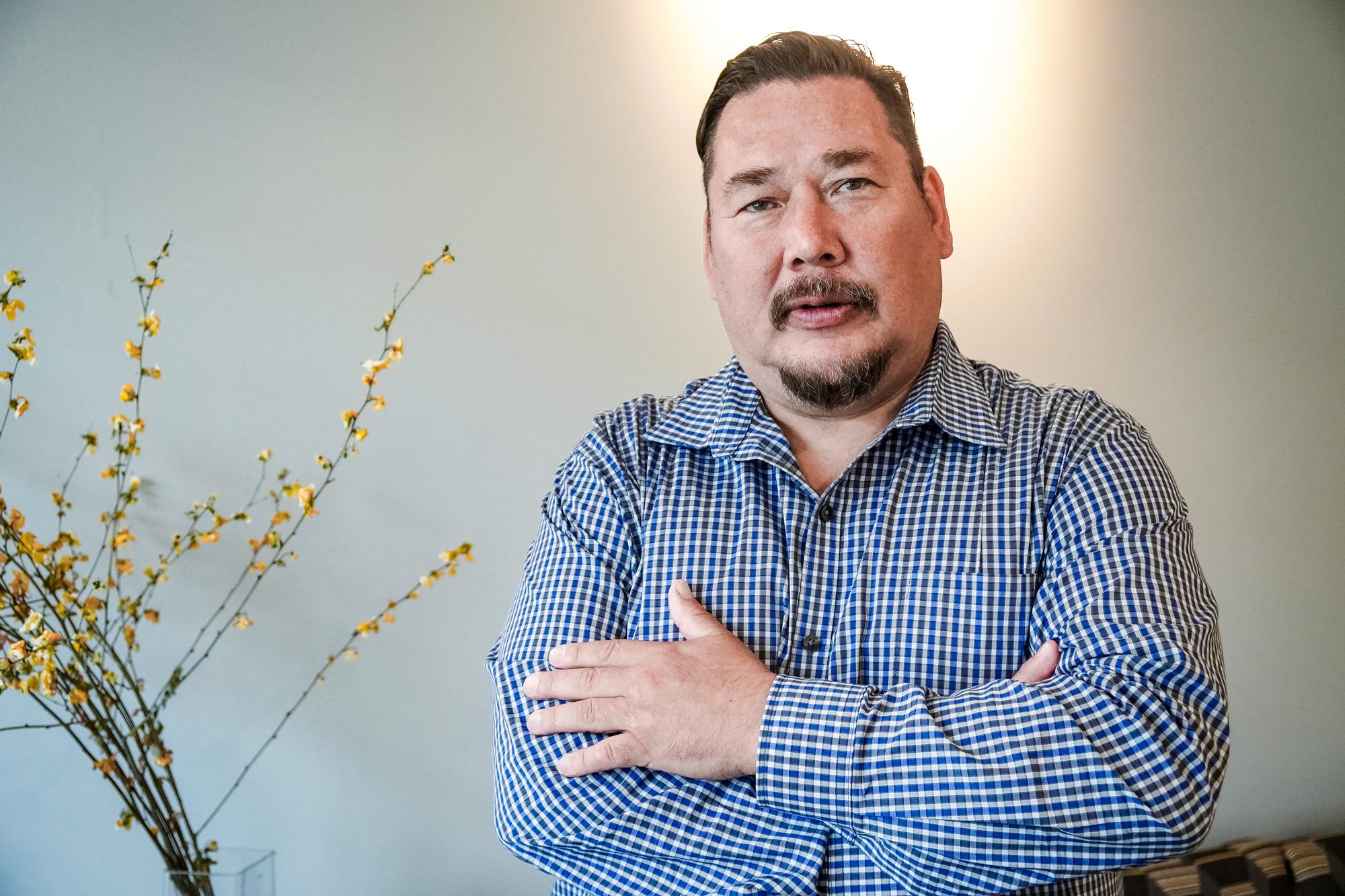
Jorgen Boassen, a Greenlandic activist who favors independence and closer ties with the United States, in Washington on Aug. 14, 2025. Nathan Worcester/The Epoch Times
Loss
Kaas’s case is complex.
Her daughter’s personal problems meant she could not raise her newborn, Kaas said. Her daughter wanted Kaas to take custody of her granddaughter so she would not be taken by the system.
Kaas said she understands that, in some cases, parents’ lifestyles make an environment unsafe for a child. She said her home, where she is raising her two other children, is stable.
“We are very much workaholic people—saving money all the time,” she said.
Kaas thinks Danes don’t relate to Greenlandic child-rearing, where involvement from extended family is more common.
For now, Kaas said she can visit her granddaughter, who is with a foster family, twice a month. She said her daughter can visit once a month but is not permitted to hold the child.
“She can only hold her hand,” Kaas said.
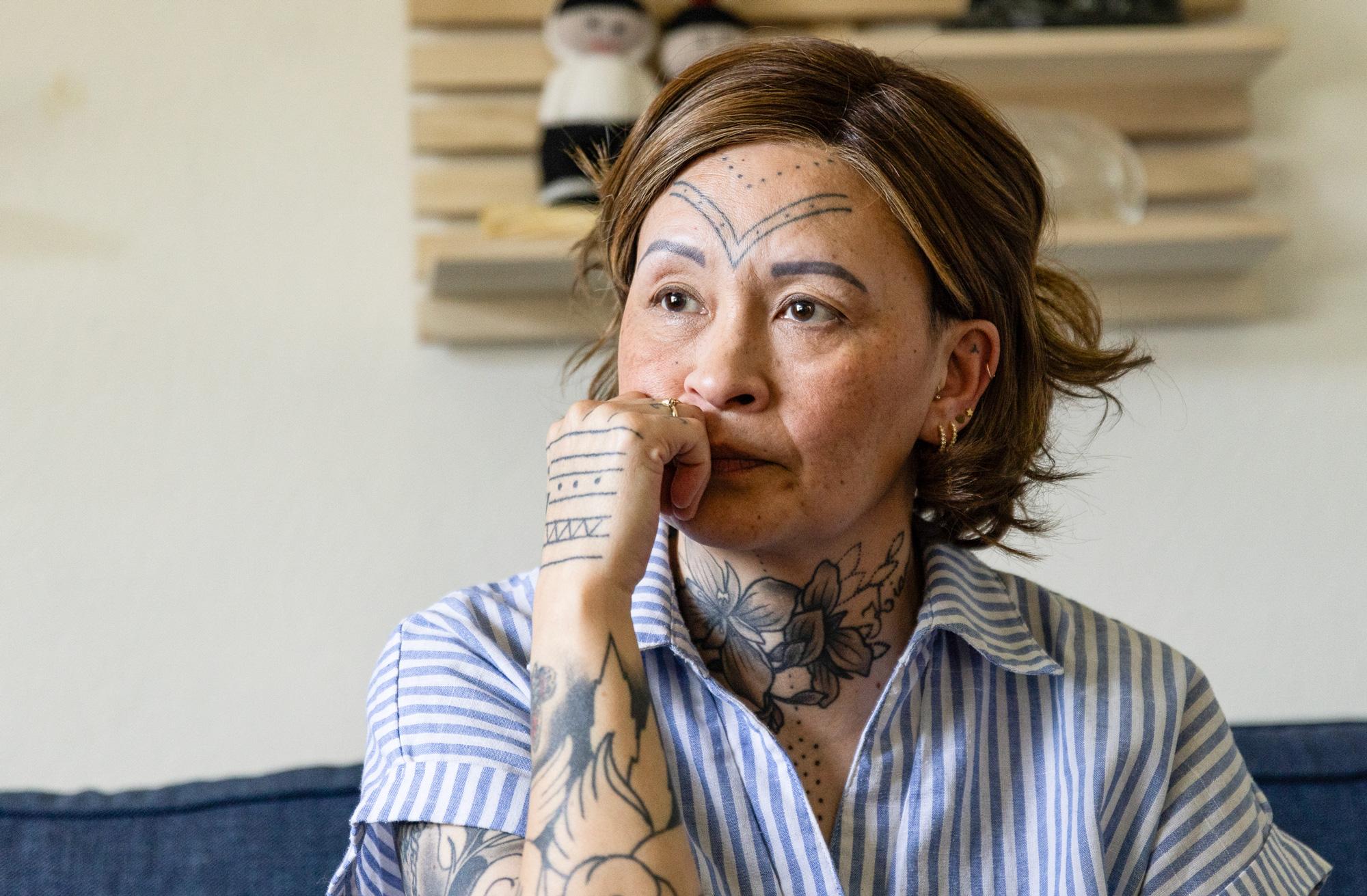
Bea Ferdinandsen Kaas sits in her home outside of Aarhus, Denmark, on April 22, 2026. John Fredricks/The Epoch Times
Platou—now many years into the loss of her boys—has lived through the sort of consequences Kaas fears.
She alleges she was guided through the early stages of a process that culminated in the loss of her children without a Greenlandic interpreter present.
Alsalem’s letter raised concerns about the lack of an interpreter at a critical juncture in the Kronvold case as well.
Platou said her twins have been moved through multiple foster settings. She alleges they were traumatized in at least one of them.
She claimed her twins have been exposed to age-inappropriate material in foster care, including violent movies.
One of her sons spoke of committing suicide at the age of 7, Platou added.
She said she heard the threat during one of her visits, when the boy said he wanted to kill himself if he could not be with his mother. Platou, who normally tries to stay strong in front of her children, said she started to cry.
A child’s bicycle sits on a bike rack in a train station in Copenhagen, Denmark, on April 24, 2026. John Fredricks/The Epoch Times
“Oh my God—he’s so young,” she recalled thinking.
Platou holds out hope that she will get her twins back this year.
She dreams of taking them back to Greenland.
They want to be hunters, she said. It’s a tradition in her family—“in the blood.”
John Fredricks contributed to this story.