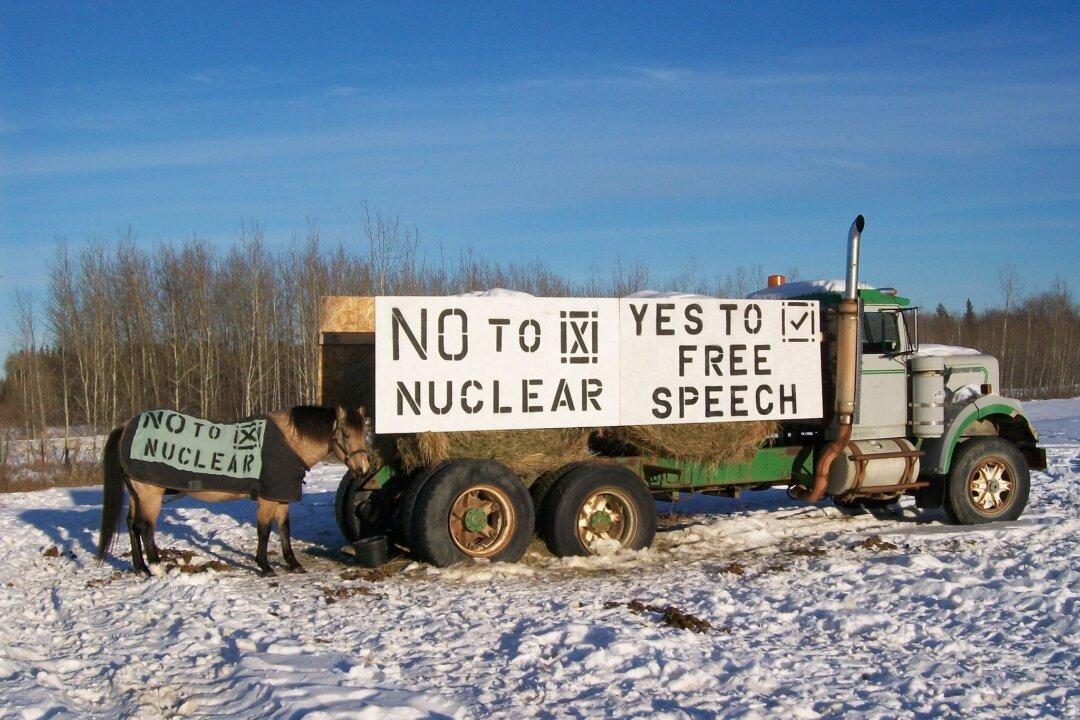
A sign put up to protest nuclear energy in the County of Northern Lights, Alta. by the Northern Action Alliance (Juri Agapow).

Alberta’s County of Northern Lights is located along the Peace River about halfway between Edmonton and the Northwest Territories and has long been favoured by nuclear energy companies for one primary reason: it has ample access to frigid river water for cooling nuclear reactors.
Fifty-seven percent of voters expressed opposition in a non-binding Oct. 20 plebiscite to a nuclear power station with two to four reactors proposed by Energy Alberta due to environmental concerns. A similar proportion of voters said they wanted more information before making a decision on whether to support the proposal.
Pat McNamara who heads the Northern Action Alliance (NAA), which opposes the proposed nuclear power plant, said a similar proposal 15 years ago by Bruce Power was rejected and opposition is no different this time.
“The community made it clear the last time that they didn’t want the reactors here,” McNamara told The Epoch Times. “People moved here for the quality of life and wildlife. That will be gone. People want to protect the river. If Alberta needs more power, use natural gas; we have lots of it.”
Energy Alberta CEO and president Scott Henuset said the proposed nuclear facility could power 4.8 million homes. He said although the company recognizes the hesitation expressed by some residents, the project is ultimately a win-win for Alberta and the local community.
“We understand that people have questions and concerns about nuclear energy in general and our project specifically – it is natural and expected at this early phase of a project of this scope and size,” Henuset wrote in an email to The Epoch Times.
“In an increasingly volatile global energy market, nuclear power offers a path to energy independence. Nuclear power offers a stable, secure energy supply which is essential for the growth and development of communities.”
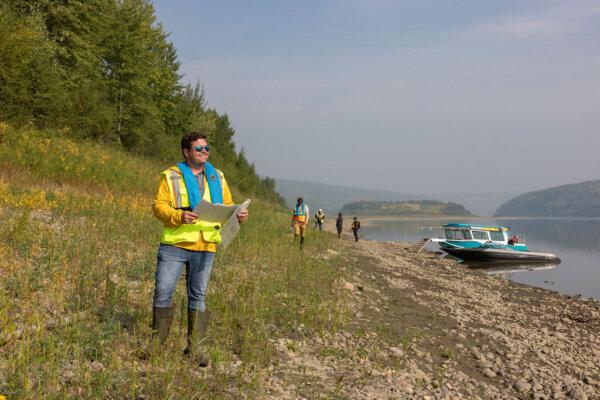
A worker participates in the summer field studies program with Energy Alberta. Photo/Energy Alberta
Opposition
McNamara said the NAA started as a current affairs discussion group among community members but transformed into an opposition group to Energy East’s proposed nuclear power plant this past April when the project was announced.
“The group had to inform and educate the community because the federal agencies mandated to do so had dropped the ball,” McNamara said.
NAA members started knocking on doors in an information campaign, in echoes of the 2008 grassroots efforts that led to the cancellation of Bruce Power’s similar previous proposal.
Energy Alberta says the process has just begun, but the NAA said its members have seen this process play out before in Bruce Power’s failed bid to build a two-reactor CANDU-powered nuclear power facility between 2007 to 2015.
Opposition from the Peace River Environmental Society and numerous indigenous communities, combined with underwhelming market conditions and Alberta’s focus on other types of power, led to Bruce Power abandoning the project in December 2015.
NAA opposes the nuclear power plant for two primary reasons, according to McNamara: the belief it would damage local farmland, wildlife, and the ecosystem of the Peace River; and the belief it would not economically aid the community as much as Energy Alberta promises. McNamara pointed to an already existing labour shortage in the region.
Additionally, McNamara said the NAA does not support Energy Alberta’s potential changeover from Canadian CANDU nuclear reactors to U.S. Westinghouse reactors, which need enriched uranium to operate. CANDU reactors, by contrast, use a Canadian-developed process that runs on natural uranium.
“Until a month ago, they planned on building CANDU reactors,” McNamara said. “They switched to Westinghouse reactors from the USA last month. These reactors use enriched uranium which is not available in Canada.”
Henuset said the decision has not yet been made on what reactors to use, and the AP1000 Westinghouse design as well as CANDU designs are two options currently being considered, adding that the memorandum of understanding with Westinghouse is just part of the overall analysis.
“The goal is to identify the option that best supports project timelines, long-term reliability, safety and overall value,” Henuset said. “The Memorandum of Understanding between Energy Alberta and Westinghouse to explore the AP1000 is part of our options analysis and does not represent a final technology selection.”
Despite opposition from some residents, the project also has local support. County Reeve Terry Ungarian is among the supporters, saying the Energy Alberta proposal represents a considerable opportunity for more investment in the area and offers reliable and secure power at a time when Alberta’s energy needs are projected to rise.
Provincial electricity demand is projected to spike by 44 percent by 2043, according to the Alberta Electric System Operator.
Energy Alberta’s proposal involves the construction of two to four large-scale nuclear reactors that it said would eventually supply around 25 percent of the province’s current electrical output. The first reactor is planned to be operational by 2035 pending necessary approvals.
Henuset said his company undertook a long-term assessment of various sites to decide on the best location for the project and ensure it met all crucial environmental, technical, and safety requirements as set out by the Canadian Nuclear Safety Commission’s regulations.
“Peace River’s location allows the Project to help meet provincial electricity demand growth while supporting Canada’s net-zero goals. More specifically, the Peace River region offers suitable land (flat, agricultural use, away from major urban centres) and access to necessary water resources for cooling,” Henuset said, adding that the project would also bring “significant economic benefits in a region facing population decline, aging demographics, and limited employment opportunities.”
Energy Alberta paused project implementation this past August to allow more community input, but said the results of last month’s plebiscite actually show a high degree of openness in the community.
“We are encouraged that the majority of residents who weighed in wanted to continue exploring the opportunity,” Henuset said, adding that his company is also currently engaging with 37 indigenous communities as part of the federal Impact Assessment process.
He noted that the referendum results were on two specific questions. The first asked if residents supported the county engaging with residents “to explore the potential impacts and benefits of a nuclear power plant within the County or neighbouring County,” which resulted in 489 in favour and 260 opposed.
The question: “Do you support a nuclear power generation facility within the County of Northern Lights?” resulted in 338 in favour and 450 opposed.
“It is understandable that there is a level of education that needs to happen,” Henuset said, adding that Energy Alberta is in the first phase of the regulatory process and will be doing more assessments and information gathering that helps to address outstanding questions and concerns from the community.
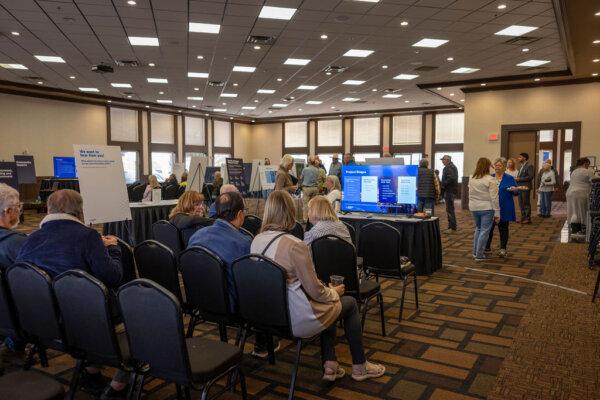
Energy Alberta hosts a local public engagement event in County of Northern Lights, Alta. (Energy Alberta).
County of the Northern Lights
The County of Northern Lights is just over 21,000 square kilometres in size and has a population of approximately 4,080. The county has experienced a slight but steady decline in population, falling from its 2017 population of more than 4,400.
The county includes the town of Manning as well as the hamlets of Dixonville, North Star, Deadwood and Notikewin, along with the Paddle Prairie Metis Settlement. Primary industries include grain and cattle farming, forestry, as well as oil and gas.
Nuclear Power for Alberta?
Nuclear energy supplies roughly 15 percent of Canada’s energy needs, but Energy Alberta’s proposal is unprecedented in Western Canada. Eastern Canada, on the other hand, has 17 operational reactors, according to the World Nuclear Association, with 16 situated in Ontario and one in New Brunswick.
An additional nuclear power plant in Bécancour, Que., shut down in 2012 after a cost-benefit analysis by Hydro-Québec resulted in the decision that it wasn’t worth the cost to refurbish an old CANDU reactor.
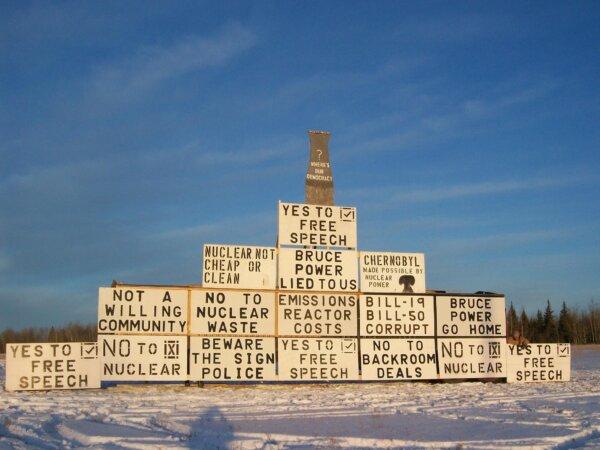
McNamara’s Peace River Environmental Society, the predecessor to the NAA, displays signs against Bruce Power’s since-withdrawn proposal for a nuclear power plant. The signs stretch 56-feet long and 28-feet high. (Juri Agapow).
Alberta currently relies primarily on natural gas to power its electric grid, drawing approximately 80 percent of its power grid from natural gas. However, Premier Danielle Smith initiated a panel to consider public input and examine the potential of nuclear energy to help meet future energy needs in late August, with a date for conclusions reached by the panel not expected in the near future.
Alberta’s Utilities Minister Nathan Neudorf said even if the province decides to move forward with nuclear power as part of the province’s energy mix, it would be close to a decade before a real uptick occurs.
Other opponents such as David Pickup of the Pembina Institute say that while nuclear energy does have considerable benefits, it’s not currently a good fit for Alberta given high living costs and other options such as wind, solar, and battery storage projects that can be operational in approximately three years, much sooner than the 15 years needed to complete a nuclear reactor facility.
Next Steps
As Energy Alberta moves forward with its proposal and engaging with indigenous communities, the federal Impact Assessment process will require multiple assessments at each phase of the project with sign-offs by indigenous stakeholders.
Henuset said his company is pursuing “meaningful, long-term relationships” with First Nations. Various First Nations have weighed in so far, including Duncan’s First Nation, which wrote in a May press release that its members haven’t been consulted adequately and want to ensure the protection of the Peace River ecosystem.
Other First Nations including Lubicon Lake Nation, Woodland Cree First Nation, the Métis Nation of Alberta – Region 6, and the North Peace Tribal Council have not commented on the Energy Alberta’s specific proposal but have issued numerous statements expressing dedication to protecting the surrounding ecosystem and being fully consulted on any major project before it moves forward.
Last month’s plebiscite is not legally binding, and the County of the Northern lights can’t block or greenlight the nuclear facility. This power is up to Ottawa via the Impact Assessment Act and the Nuclear Safety and Control Act. Still, the federal review process gives considerable weight to local popular and political support and opposition.

Energy Alberta participates in community outreach in County of Northern Lights, Alta. (Energy Alberta).
The NAA is adamant that the project isn’t the right fit for Alberta. However, on the national side, Carney has made it clear he wants nuclear energy to have a prominent place in Canada’s transition to “net zero” national carbon emissions by 2050, a goal the government put into law in 2021.
Carney made his commitment to nuclear energy clear during an Oct. 23 investment announcement of $2 billion to build four new small modular reactors for the Darlington New Nuclear Project in Bowmanville, Ont.
“By unleashing private investment, advancing energy security, and strengthening the industrial base that will power the clean-energy transition, we are building Canada strong,” the Prime Minister’s Office said on Oct. 23.
The Canadian Press contributed to this report.