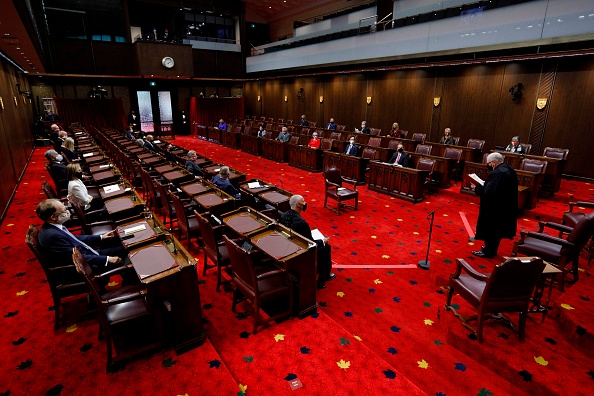
Senate Speaker George Furey speaks before the throne speech in the Senate chamber on September 23, 2020, in Ottawa, Canada. (Photo by BLAIR GABLE / POOL / AFP)
Wilfrid Laurier University professor David Haskell says proposed legislation that removes religious exemption to hate speech laws would be detrimental to the rights of Christians in Canada, which he argues are already under sustained attack.
Haskell’s comments came during a recent hearing on Bill C-9 before the Senate committee on human rights, and were joined by criticisms from several other expert witnesses who said the bill is too vague to effectively counter hateful incidents or so open to interpretation that it risks infringing on basic civil liberties.
“If this Criminal Code protection is removed, it will be open season on Christians, as ideological opponents increasingly claim [Christians’] beliefs harm society,” Haskell told senators, adding that “it will lead to even more discrimination against Christians in Canada and negatively affect the social good they contribute.”
Bill C-9 passed third reading in the House of Commons by a vote of 186–137 on March 25 and is now before the Senate. If senators vote to amend portions of it, the bill may go back to the House of Commons for debate and potential approval of the amended bill.
Among other measures, the bill proposes to expand existing hate crime and hateful incitement laws by creating new Criminal Code offences, including engaging in “intimidation” near religious schools and institutions as well as the public display of various symbols associated with designated terrorist entities or hateful ideologies.
It would also remove Section 319(3)(b) of Canada’s Criminal Code, which protects good-faith expression of religious views based on religious texts.
Christian Rights
Haskell, a professor of the sociology of religion at Laurier, said the bill’s proposal to remove existing protections on good-faith religious expression would increase mounting incursions on the religious liberty of Christians in particular.
He said that such incursions have been taking place in Canada under successive governments despite earlier assurances that the rights of all individuals would be upheld.

David Millard Haskell, professor of the sociology of religion at Wilfrid Laurier University. Courtesy of David Millard Haskell
Haskell, who identified himself as a Christian conservative, cited the case of Trinity Western University (TWU), which was denied accreditation for a proposed law school in 2012 by the law societies of B.C. and Ontario due to the Christian institution requiring students to sign an agreement where they committed not to have sex outside of heterosexual marriage.
The Supreme Court of Canada upheld the law societies’ legal right to deny accreditation in a 2018 ruling, followed by TWU making the student covenant optional a few months later.
“This private Christian institution was sanctioned and denied the benefit of establishing a law school, specifically because of its biblical beliefs about marriage,” Haskell said.
Haskell also mentioned Bill C-16, which if passed adds gender ideology as a protected category under hate speech law.
“At the time, the government repeatedly promised the bill would not compel anyone to affirm gender ideology or criminalize ordinary disagreement,” Haskell said. “Again, that promise was broken,” he added, pointing to the case of former B.C. school trustee Barry Neufeld who was fined $750,000 by the B.C. Human Rights Tribunal for espousing the Christian belief that there are only two genders and sex is unchangeable.
The professor also referenced the case of Ontario teachers Matt and Nicole Alexander, who said they were fired from their teaching positions in 2023 for choosing not to celebrate LGBT events.
A number of religious organizations have spoken out against the bill, including the Canadian Conference of Catholic Bishops, who said the legislation would create “uncertainty for faith communities.”
Meanwhile, several Jewish rights groups, including Centre for Israel and Jewish Affairs, have welcomed the legislation for tackling hate crimes amid a rise in antisemitic incidents in recent years.
The government says the proposed legislation is meant to address rising “Islamophobia, homophobia, and transphobia,” and is another attempt by the Liberals to introduce broader controls over online speech, after previous attempts at similar legislation failed to pass due to the dissolution of Parliament. The removal of the religious defence for speech was added to the bill at the request of the Bloc Québécois as a condition for the party’s support, back when the Liberals did not yet have a majority.
‘No Silver Bullet’
Fellow witness Kenneth Grad, who serves as assistant professor and lead jurist of the Winograd Initiative for the Study of Hate Speech and Anti-Semitism at the University of Manitoba’s Faculty of Law, said that while hate crimes and hate speech are a grave and growing problem in Canada, cracking down at the criminal level is unlikely to actually reduce expressions of hatred.
“Prosecutions have been infrequent, convictions have been difficult to obtain, and hate speech has continued to rise,” Grad told senators of attempts in the past decades to increase enforcement and legal consequences for hateful speech and incidents.
In fact, Grad argued that criminal trials can sometimes actually serve to amplify hateful voices by giving offenders more public exposure and opportunity to air their views.
Grad urged lawmakers, instead, to focus on increasing education and awareness of history on issues such as the Holocaust in order to reduce hate.
He added that intercultural dialogue, better oversight of digital platforms, and civil remedies such as human rights complaints should also be emphasized.
“A consistent finding in social scientific literature is that sustained cross-cultural and intergroup contact is among the most effective ways to reduce prejudice and intergroup hostility,” Grad said, adding that “there is no silver bullet here with respect to the rise of human hatred and hate speech.”
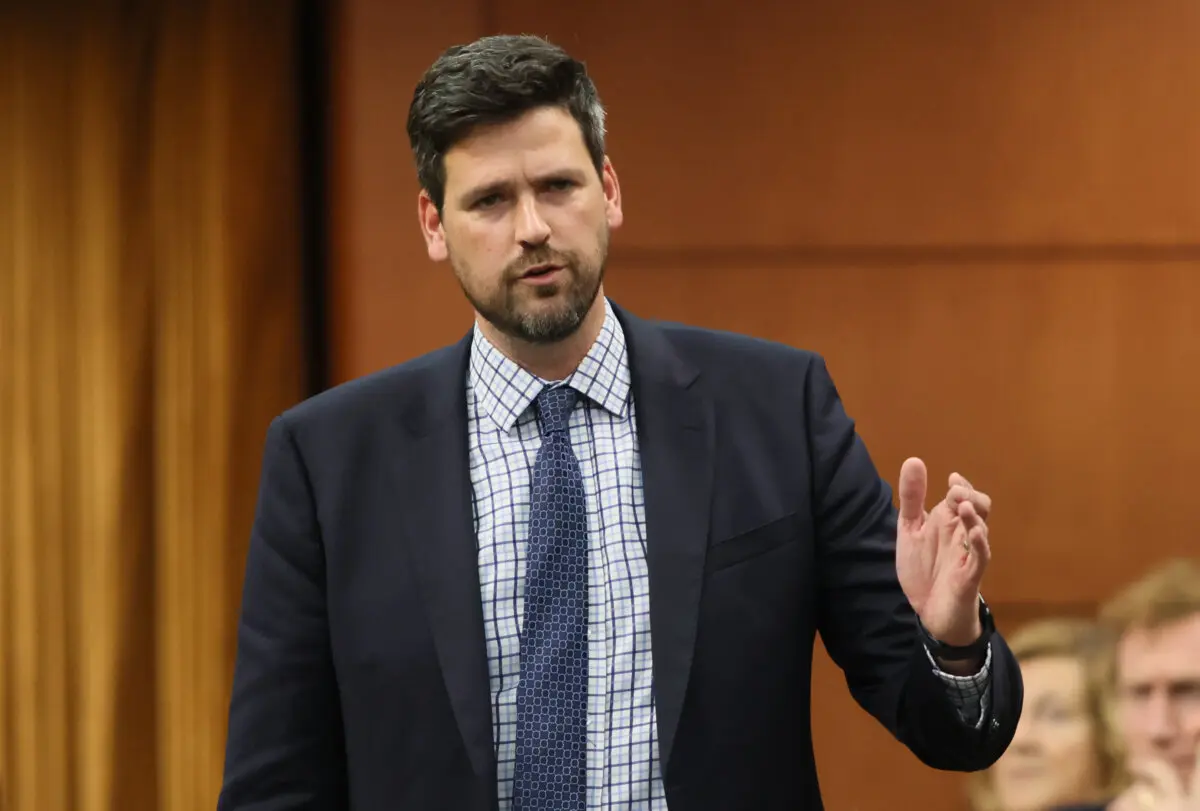
Minister of Justice Sean Fraser responds to a question in the House of Commons in Ottawa on June 19, 2025. The Canadian Press/Patrick Doyle
Other Perspectives
Further perspectives came from Director of the Fundamental Freedoms Program at the Canadian Civil Liberties Association (CCLA) Anaïs Bussières McNicoll, who said Bill C-9 in its current form risks criminalizing lawful protest and peaceful assembly.
“The CCLA is deeply committed to combating hatred and building a more inclusive society,” McNicoll said. “However, criminal law is a blunt instrument that must be used carefully and only when necessary.”
In particular, McNicoll said the bill’s new restriction against intimidation is “impermissibly vague and subjective, and risks being used to chill dissent.”
“Could it be triggered when a protest is particularly loud, when hundreds of people are gathered in a public space, disrupting their daily lives, when some protesters utter slogans, which, while unpleasant or offensive, do not meet the Supreme Court of Canada’s definition of hate propaganda?” she said.
McNicoll added that existing Criminal Code provisions already prohibit conduct such as assault, threats, vandalism, riots, and advocating violence against identifiable groups.
National Coordinator for the International Civil Liberties Monitoring Group Tim McSorley echoed some of McNicoll’s concerns, saying aspects of Bill C-9 potentially threaten basic freedom of expression, particularly around hateful symbols and what precisely constitutes legally actionable hate.
“These provisions pose a significant threat to freedom of expression by granting broad and discretionary powers to police,” he said.
“The government has stated that simple display of an impudent symbol would not violate law without additional evidence of intent. However, this is not clear from the drafting,” McSorley added.
In defence of the bill, Justice Minister Sean Fraser has said it will protect Canadians against hate.
“One of the great promises of Canada is the right of its citizens to live freely, regardless of the colour of their skin, the God they pray to, their gender identity, or the person they love,” Fraser said in the House of Commons in September 2025.
“Sadly, too many Canadians are routinely robbed of these freedoms, not necessarily by operation of law but too often by virtue of the actions of hate by their fellow Canadians against them.”