Shipping disruptions and plant shutdowns hit fertilizer supply as analysts warn industry is ‘in paralysis’ and say ‘full implications are not yet known.’
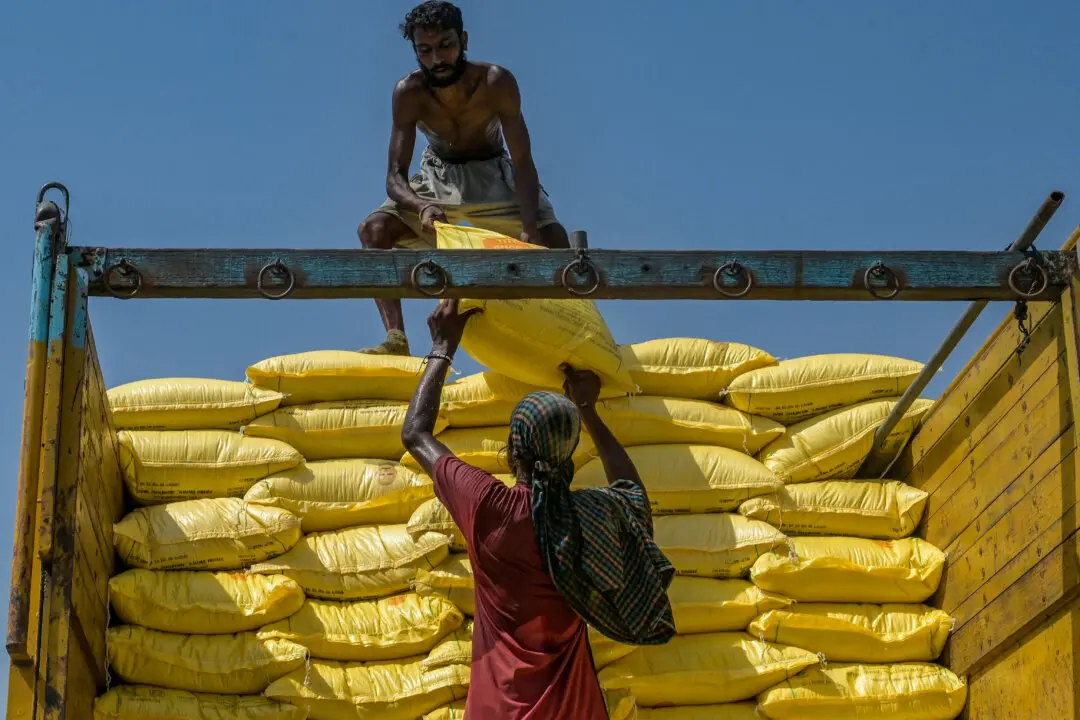
Shipping disruptions and plant shutdowns hit fertilizer supply as analysts warn industry is ‘in paralysis’ and say ‘full implications are not yet known.’
The closure of the Strait of Hormuz has shocked global fertilizer markets just as farmers worldwide prepare to plant spring crops, raising concerns that the disruption could ripple through food supply chains.
Several major fertilizer-producing countries in the Gulf rely on the narrow shipping channel to move products to global markets.
Since the United States and Israel launched strikes on Iran on Feb. 28 and Iran began targeting commercial ships in response, shipping through the Strait of Hormuz—which runs along Iran’s coast—has slowed to a near standstill.
No Vessels Leaving With Fertilizer
According to a March 11 report from shipping analytics firm Kpler, the conflict has affected the fertilizer trade, with “port suspensions, production halts, and a fleet of laden vessels with cargoes from across the Middle East Gulf unable to transit the Strait of Hormuz.”
Kpler said it observed 23 vessels either loading or already laden with fertilizers in the Middle East Gulf, noting that only one ship, the Ksl Hengyang, successfully transited the strait on March 7.
“No other vessel laden with fertiliser has departed the region since,” the report said.
Food Prices
The disruption could have wide-ranging consequences for food production.
On March 9, a spokesperson for U.N. Secretary-General Stéphane Dujarric said the disruption “will impact the world’s access to fertilizer, … which will increase the cost of fertilizer, which will increase the cost of food production.”
Global food prices were already starting to rise before the latest disruption.
According to the U.N. Food and Agriculture Organization, the benchmark measure of world food commodity prices increased in February, ending a five-month decline.
On March 5, Cédric Benoist, who farms wheat, barley, and other crops south of Paris, said that global fertilizer prices have jumped by dozens of euros per metric ton.
“It’s a mess because it’s spring,” he said.
Nearly 50 percent of global urea and sulfur exports originate from countries west of the strait and transit the waterway, and Saudi Arabia, one of the world’s largest phosphate exporters and a major supplier to the United States, also relies heavily on the route, according to the Fertilizer Institute.
About 20 percent of global liquefied natural gas, a key feedstock used to produce nitrogen fertilizers, also passes through the strait.
Natural gas is the primary input in the production of ammonia, the foundation of nitrogen fertilizers such as urea, which contains about 46 percent nitrogen and is the most widely used solid fertilizer globally.
QatarEnergy, the world’s largest single liquefied natural gas producer, said in a March 4 post on X that it had declared force majeure, meaning it could not guarantee deliveries amid the Iran war, affecting supplies.
According to a March 10 AgWeb report, fertilizer prices have surged since the end of February; the price of urea has risen by $140 per ton, that of anhydrous ammonia is up by $100 per ton, and the price of urea ammonium nitrate has increased by $100 per ton.
‘In Paralysis’
According to Fertilizer Week, a trade newsletter published by London-based commodities research firm CRU, about 47 percent of globally traded sulphur, 43 percent of urea, 27 percent of ammonia, and 24 percent of phosphate fertilizers could be affected.
The publication said in a March 10 post on X that the industry is “in paralysis” and that the “full implications are not yet known.”
The global fertilizer market had already been tightening, as China is restricting exports to ensure domestic supply until the end of August, according to the American Farm Bureau Federation.
‘Continued Supply Is Essential’
Farming groups have also raised concerns that the disruption could spread through global agricultural markets just as planting season begins.
The American Farm Bureau Federation said in a March 9 post that the fertilizer industry is highly interconnected.
“Fertilizer markets are globally integrated, so supply disruptions in one region can influence prices and availability elsewhere,” the group said.
The UK’s National Farmers’ Union (NFU) also said that rising input costs linked to the conflict could ultimately push up food prices.
NFU President Tom Bradshaw said the escalating conflict in the Middle East “is a concern” and that the organization is monitoring developments closely.
“We’ve already seen how disruption to global oil and gas markets has influenced the price of fuel and fertilizer here in the UK, which are key inputs used for spring planting, growing crops, and forage production,” he said.
COPA-COGECA, which represents EU farmers and agricultural cooperatives, said in a March 10 post on X that fertilizer imports into the bloc had fallen sharply.
The group said the EU imported “only 365,413 [metric tons] of nitrogen fertilisers, just 33 percent of the average February imports over the past three years,” adding that January imports were even lower, at about 17 percent of the three-year average.
It said that higher imports late last year had been used to build stockpiles ahead of new EU trade policies, but those reserves are now largely depleted. In January and February, imports were already 1.69 million metric tons lower than in the same period in 2025.
COPA-COGECA stated that “this shortage was already critical before the war in Iran.”
‘Couldn’t Think of a Worse Time’
Analysts have said the disruption is hitting fertilizer markets at a particularly sensitive moment.
Alexis Maxwell, senior analyst on Bloomberg Intelligence’s agriculture team, told Bloomberg’s Odd Lots podcast on March 11 that she “couldn’t think of a worse time to have a supply side shock and resulting surge in fertilizer prices for farmers, effectively just about everywhere.”
She said urea is a granular fertilizer that can be shipped easily as a bulk commodity, making it relatively inexpensive to transport and widely accessible. Production tends to be concentrated in regions with low-cost natural gas, including Russia, the Middle East, the United States, and China.
Although urea can be stored for several months if kept dry and protected from the elements, the fertilizer industry generally operates on a “make and ship” model rather than maintaining large inventories.
“There isn’t a strategic reserve of urea the same way that we would have it like in oil, for example, which is partially why this crisis is really compounding,” she said.
Many countries remain highly exposed to disruptions in Gulf fertilizer exports.
India buys more than 40 percent of its urea and phosphatic fertilizers from the Middle East, according to S&P Global.
Much of Europe and Asia also rely heavily on fertilizer imports, while the United States is relatively more insulated because of large domestic nitrogen production.
The disruption comes as Europe was already reshaping its fertilizer supply chains because of the Ukraine–Russia war, which started in 2022.
The European Union is set to implement steep tariffs on Russian and Belarusian fertilizer imports, particularly nitrogen-based products, starting on July 1, and duties are expected to reach nearly 100 percent by 2028.
The measures are intended to curb revenues linked to the war in Ukraine.
In 2023, imports of the affected fertilizers from Russia accounted for more than 25 percent of the EU’s total imports in the sector.
In a report in 2025, the bank Rabobank said a closure of the Strait of Hormuz could severely disrupt fertilizer trade.
Monoammonium phosphate (MAP) and diammonium phosphate (DAP) are widely traded phosphate fertilizers used to supply crops with phosphorus and nitrogen.
Rabobank analysts said the nitrogen complex, and urea in particular, “would bear the brunt, given the scale of the region’s importance to global exports” and the “interdependencies of other nutrients, such as MAP and DAP, which use ammonia for production.”
“Immediate closure would increase prices worldwide,” the bank said.