The president’s demand follows a national security warning from Sen. Tom Cotton (R-Ark.) about the Intel CEO’s links to firms tied to China’s military.
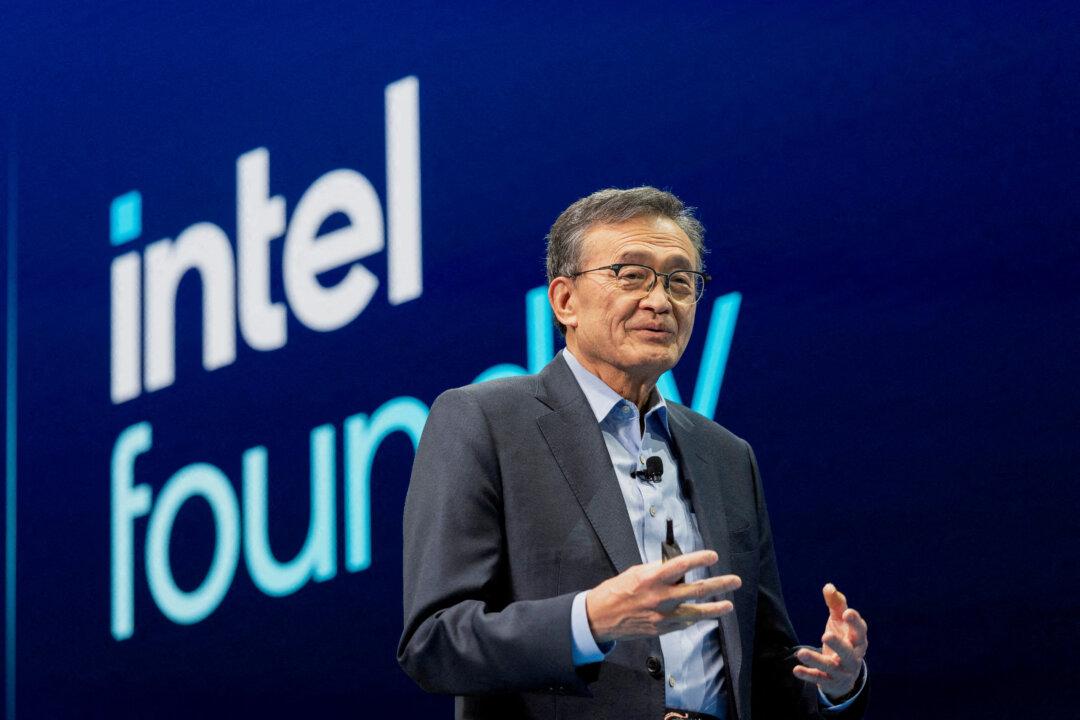
Intel CEO Lip-Bu Tan speaks at the company’s Annual Manufacturing Technology Conference in San Jose, Calif., on April 29, 2025. Laure Andrillon/File Photo /Reuters

President Donald Trump on Aug. 7 called for the immediate resignation of Intel CEO Lip-Bu Tan, echoing growing Republican concerns about the executive’s alleged ties to Chinese firms linked to the People’s Liberation Army, the military wing of the Chinese Communist Party.
“The CEO of Intel is highly conflicted and must resign, immediately,” Trump wrote in an Aug. 7 post on Truth Social. “There is no other solution to this problem. Thank you for your attention to this problem.”
Intel, headquartered in Santa Clara, California, plays a critical role in U.S. economic and national security policy as a leading manufacturer of cutting-edge chips used in defense systems, data centers, and artificial intelligence.
The Epoch Times has reached out to Intel with a request for comment on Trump’s remarks.
Trump’s call comes two days after Senate Intelligence Committee Chairman Tom Cotton (R-Ark.) sent a letter to Intel’s board raising national security concerns over Tan’s business associations and tenure at Cadence Design Systems—a company that last week pleaded guilty to illegally exporting chip design tools to a Chinese military university.
Tan served as CEO of Cadence from 2009 to 2021, overlapping with the time of the violations, which included selling advanced U.S.-origin electronic design automation software to China’s National University of Defense Technology, a sanctioned institution involved in military supercomputing and nuclear simulation.
The Justice Department said Cadence will pay more than $140 million in penalties and forfeitures as part of the plea agreement. The exports were routed through a wholly owned subsidiary based in Shanghai, according to court filings.
Cotton’s letter to Intel Chairman Frank D. Yeary questioned whether the board was aware of federal subpoenas issued to Cadence Design Systems as part of the Justice Department’s investigation into export control violations—some of which occurred during Tan’s tenure as CEO—before his appointment in March 2025.
Tan, 65, was born in Malaysia and raised in Singapore before moving to the United States, where he earned degrees from MIT and the University of San Francisco. He previously worked for several semiconductor companies, including China-based SMIC.
Intel recently received more than $8 billion in direct federal funding under the CHIPS and Science Act, as well as a $3 billion manufacturing contract under the Pentagon’s Secure Enclave program. The Defense Department said the contract is meant to “ensure access to a domestic supply chain of advanced semiconductors for national security.”
In late July, Intel announced second-quarter results and plans to cut about 15 percent of its global workforce by year’s end. The company reported $12.9 billion in revenue for the quarter and recognized $1.9 billion in restructuring charges. It also announced a pullback from overseas manufacturing expansions in Germany and Poland.