China’s United Front is about ‘political struggle,’ not person-to-person exchange, said Peter Mattis, president of the Jamestown Foundation.
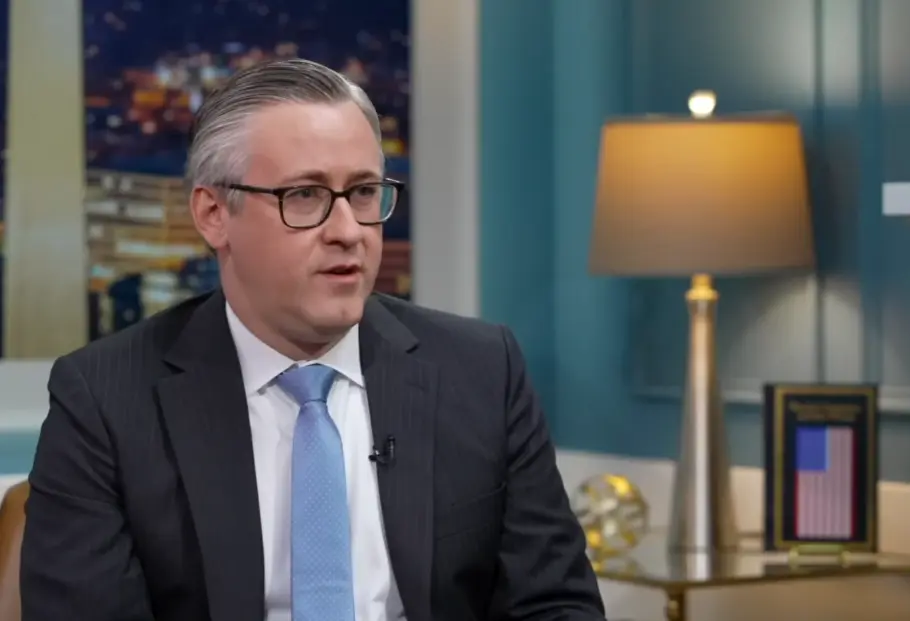
Peter Mattis, president of Jamestown Foundation, speaks to EpochTV’s “American Thought Leaders’ on April 20, 2026. Screenshot via The Epoch Times
More than 1,000 U.S.-based organizations have individuals involved in collaboration with the Chinese Communist Party (CCP) through its “United Front” influence network, according to a China expert.
Peter Mattis, president of Jamestown Foundation, said in an interview with “American Thought Leaders” that aired on April 25 that China’s United Front system is “basically a way in which the party tries to control and mobilize the people that are outside” of the country.
“It’s a tool that can be used for technology transfer. It’s a tool that can be used to talent spot—whether you’re looking for political talent, whether you’re looking for scientific talent—to bring back to the PRC,” Mattis said, using the abbreviation of China’s official name, the People’s Republic of China.
There is no direct equivalent of China’s United Front in the United States, and it is therefore poorly understood, the House Select Committee on the CCP said in a 2023 memo. The system consists of a network of organizations that operate in parallel with Beijing’s foreign ministry and intelligence services and are coordinated by the CCP’s United Front Work Department.
A February report from the Jamestown Foundation found more than 2,000 organizations linked to China’s United Front system across Canada, the United States, the UK, and Germany.
Mattis described a scenario in which trusted civic and cultural associations, such as Rotary clubs, Kiwanis clubs, and parent-teacher associations, could be leveraged to obscure Chinese influence when even a single member is “knowingly collaborating with the CCP.”
Such dynamics distort representation, leading elected officials—from governors and senators to local council members—to believe they are representing constituents when, in reality, they are being used to convey “Beijing’s voice,” he said.
“They’re essentially hijacking our citizens’ voices to represent the party,” Mattis said. “This is fundamental to what it means to have sovereignty embedded in the people.”
To illustrate the dynamic, Mattis likened organizations co-opted by the CCP to tall grass cultivated to hide snakes, suggesting that ordinary members are often unaware they are “being used” to conceal the involvement of Chinese state entities, such as the Ministry of State Security, the People’s Liberation Army, and the Ministry of Public Security.
United Front
China’s overseas police stations fit into the broader United Front system of influence, Mattis said.
In 2022, Spain-based nonprofit Safeguard Defenders revealed in a report that China had established more than 100 overseas police stations in 53 countries. The report stated that the CCP prefers to cooperate with United Front-linked overseas NGOs or civil society associations, “setting up an alternative policing and judicial system within third countries,” and involving those organizations in what it describes as “illegal methods” used to pursue fugitives.
One such Chinese overseas police system in New York City came to light in 2023, when the FBI arrested two individuals on charges of conspiring to work as CCP agents and taking orders from the regime to track down and silence Chinese dissidents in the United States.
Mattis said the United Front system also reflects the CCP’s model of governance, which places ideological control on par with external military threats. He pointed to China’s 2015 National Security Law, which defines national security as the relative absence of international or domestic threats to the party’s ability to govern.
That broad definition, he said, drives a constant effort to identify risks to party rule.
“So there’s always a perpetual search for enemies, a perpetual search for ideas that are dangerous,” Mattis said. “So the border that matters is not the People’s Republic and the rest of the world, it’s the party and everyone else.”
In practice, this concern extends beyond China’s borders to how Beijing views overseas Chinese communities, Mattis said.
“Are there ideas that can be transmitted back into the PRC that would threaten the party’s ability to rule?” he said.
“How do you ensure that there are no Chinese communities abroad that are going to be transmitting these ideas back into the PRC in ways that would resonate? Because you and I can’t do that, but those communities can.”
As a result, China has expanded its media influence in the past two decades, and most Chinese-language media outlets have aligned with the CCP, with a few exceptions, Mattis said.
Additionally, the CCP has exported its information firewall to WeChat, a popular Chinese messaging and social media app, so that Chinese nationals continue to live inside the CCP’s “information bubble” even after leaving China.
“Wherever there is connectivity to the PRC, it can be weaponized, and the party is willing to weaponize it against people,” Mattis said. “Whether that means shaping what they read, shaping what they hear, shaping how they interact.”
Ultimately, China’s United Front is not a platform for genuine exchange between Beijing and other democratic countries, Mattis said.
“[Former Chinese leader] Mao Zedong described United Front work as a tool to storm and shatter the enemy’s position,” he said. “That means that organization is about political struggle. It’s not about exchange. This isn’t a way that we reach Chinese people. This isn’t a way that we reach to the party leadership. This is there to affect us, not allow us to affect them.”