Weeks after Trump’s glyphosate executive order, many MAHA proponents believe that awareness about chemicals and regenerative farming is on the rise.
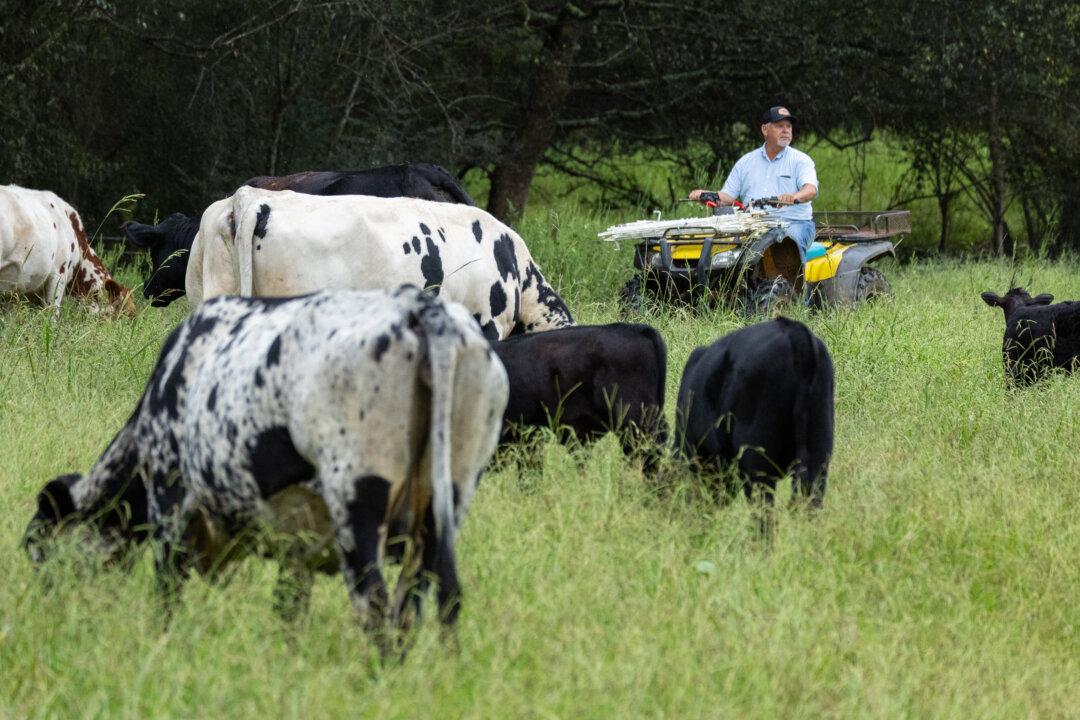
Derek Perry uses an ATV to round up cattle in Pelahatchie, Miss., on Sept. 24, 2025. John Fredricks/The Epoch Times
President Donald Trump signed an executive order that propelled the domestic production of elemental phosphorus and glyphosate-based herbicides on Feb. 18. Since then, many proponents of the Make America Healthy Again (MAHA) movement have said that backlash from the move will heighten awareness among farmers and consumers about the dangers of chemicals in agriculture and encourage more growth in regenerative farming.
Last month, Trump invoked the Defense Production Act when he signed the executive order. Shortages of phosphorus and glyphosate would create a risk to national security, he declared in the executive order.
Elemental phosphorus is a key ingredient in the formulation of glyphosate, which the White House said is essential to maintaining food security. According to the executive order, the Department of the Interior has designated elemental phosphorus as a scarce material.
John Klar is an attorney turned regenerative cattle farmer in Vermont. He works with the nonprofit MAHA Action and is the author of “Small Farm Republic” and the forthcoming “The War on Farmers: How Corporations, Activists, and Climate Alarmists Are Fueling a Global Food Crisis.”
More people are becoming educated about glyphosate, which is a silver lining to Trump’s order, Klar believes.
“The more that people learn about it, the more they seek to avoid it and scrutinize their food labels. The more they avoid it, the more they purchase trustworthy organic alternatives, thereby increasing demand for those safer offerings,” Klar said.
“No one is eating glyphosate in the name of defending national security,” he added.
Glyphosate
Glyphosate is used to kill weeds and dry crops before harvest.
Glyphosate-tolerant crops account for a significant majority of the corn, soy, and cotton acreage on American farms.
Through its subsidiary Monsanto, Bayer is the only U.S. producer of glyphosate, which is the key ingredient in Roundup. It is the most widely used herbicide in history, according to the Global Glyphosate Study.
Today, 280 million pounds of glyphosate are sprayed on 285 million acres of U.S. farmland every year, according to the nonprofit Center for Food Safety, which advocates for organic and sustainable food.

Cows in a field at Polyface Farm. Courtesy of Polyface Farm
Trump’s executive order called glyphosate-based herbicides “the most widely used crop protection tools in United States agriculture” and “a cornerstone of this Nation’s agricultural productivity and rural economy, allowing United States farmers and ranchers to maintain high yields and low production costs while ensuring that healthy, affordable food options remain within reach for all American families.”
“There is no direct one-for-one chemical alternative to glyphosate-based herbicides,” the EO states. “[The] lack of access to glyphosate-based herbicides would critically jeopardize agricultural productivity.”
China Connection
The order angered some proponents of the MAHA movement, who are focused on educating people about the human health dangers posed by glyphosate and working to prevent chemical makers from getting legal immunity.
More than 6 million kilograms of elemental phosphorus are imported annually, with the majority of generic glyphosate coming from China. Elemental phosphorus is not only a precursor to glyphosate, but it is a critical input for semiconductors, lithium-ion batteries, and military applications, including smoke, illumination, and incendiary devices, Tony Lyons, executive director of MAHA Action, said.
“President Trump has been consistent in his commitment to reducing American dependence on China across every critical supply chain,” Lyons said. “Allowing a geopolitical adversary to control inputs that affect both military readiness and the food supply of 330 million Americans is a vulnerability no serious administration can ignore.”
Health Secretary Robert F. Kennedy Jr. responded to the backlash in a Feb. 22 X post, acknowledging that “pesticides and herbicides are toxic by design, engineered to kill living organisms” and noting that “when we apply them across millions of acres and allow them into our food system, we put Americans at risk.”
“Chemical manufacturers have paid tens of billions of dollars to settle cancer claims linked to their products, and many agricultural communities report elevated cancer rates and chronic disease,” Kennedy wrote.
“Unfortunately, our agricultural system depends heavily on these chemicals,” he said.
The United States represents 4 percent of the world’s population and uses around 25 percent of its pesticides, Kennedy said.
“If these inputs disappeared overnight, crop yields would fall, food prices would surge, and America would experience a massive loss of farms even beyond what we are witnessing today. The consequences would be disastrous,” he said.
He reiterated his support for Trump’s order “to bring agricultural chemical production back to the United States and end our near-total reliance on adversarial nations.”
Bayer has repeatedly said that glyphosate is safe, often citing a 2016 Environmental Protection Agency (EPA) review that determined that the pesticide ingredient was “not likely to be carcinogenic to humans.”
The company has a page on its website titled “The Truth About Glyphosate.” One section stated that the chemical “has undergone rigorous regulatory evaluations by the EPA and has consistently met the strict standards of safety.”
In 2015, the International Agency for Research on Cancer—part of the World Health Organization—classified glyphosate as a probable human carcinogen, a substance that can cause cancer.
Increased Awareness
Moms Across America is focused on “exposing the truth about what is in our food supply” and informing the public about the benefits of organic food.
Zen Honeycutt, the organization’s founder and executive director, called Trump’s executive order a “love letter to glyphosate” and said it heightens the importance of transitioning away from chemical herbicides and pesticides.
She told The Epoch Times that the glyphosate executive order increased awareness of the chemical, much like the COVID vaccine mandates escalated knowledge about the side effects of inoculations.
“We will keep raising awareness about glyphosate and focus on the solutions that include regenerative organic food, learning how to grow your own food organically, and not waiting for or relying on the government to improve our health,” Honeycutt said.
Behind the wheel of his beloved pickup truck, Will Harris, 71, navigates the bumpy red clay roads that wind through the fields and forests of White Oak Pastures.
Harris is the fourth generation of his family to raise cattle on this land in rural southern Georgia. His adult daughters represent the fifth generation, and at least a few grandchildren will likely continue the tradition, he said.
Until the mid-1990s, Harris farmed conventionally, relying heavily on chemicals, pesticides, and antibiotics. Then started the transition to regenerative methods, which prioritize building and preserving healthy soils, avoiding synthetic fertilizers and pesticides, and minimal or no tilling.
Today, White Oak Pastures is a pilgrimage destination for conventional farmers who want to transition to regenerative methods.
In 1976, he said, he graduated from the University of Georgia with a degree in animal science, returned to the farm, and ran it as his father had, as an “industrial, conventional, monocultural cattle guy.”
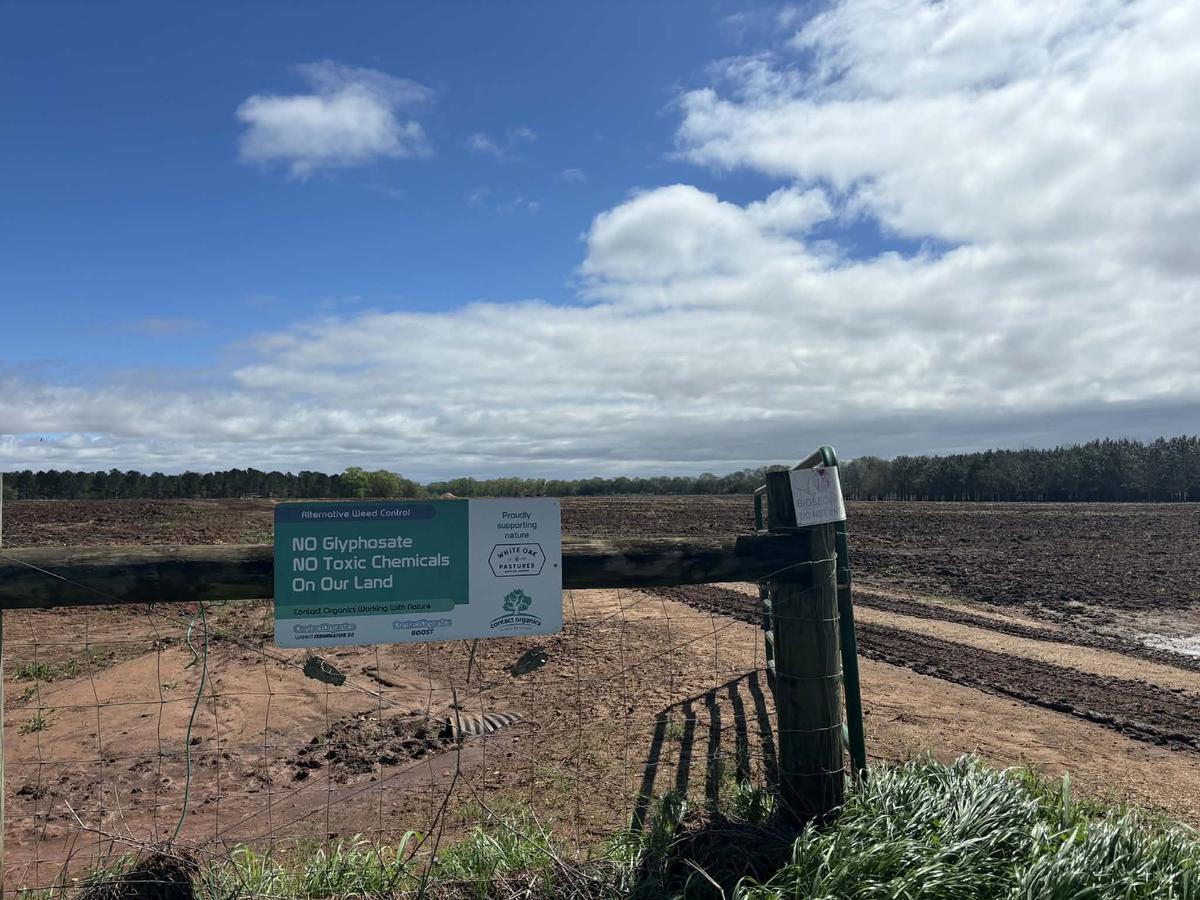
White Oak Pastures, operated by fourth-generation farmer Will Harris in Bluffton, Ga., uses regenerative farming methods and does not use chemical herbicides and pesticides. Jeff Louderback/The Epoch Times
“We were heavily invested in all the tools, pesticides, chemical fertilizer, and antibiotics,” said Harris, who is also the founder of the Center for Agricultural Resilience, an organization centered on education about the benefits of regenerative farming. “We didn’t make a lot of money, but we were profitable.”
“All of those ways have negative unintended consequences—like degradation of the soil and water, and poor animal welfare,“ he added. ”It’s hard on the land, the water, the environment, and all of the animal species.”
Harris spoke to The Epoch Times at an event at White Oak Pastures titled an “Immersive Introduction to Regenerative Agriculture.” Many of the farmers in attendance currently use conventional practices and want to transition to regenerative methods.
“That gives me hope. These people are coming from all around the country at their own expense to see our operation and learn about how to implement what I know first-hand is a way to flourish in a way that is healthy for the land, the animals, and people who consume the food,” Harris said.
GMO Corn and Soybeans
Joel Salatin owns and operates Polyface Farm in Virginia. He is regarded as a pioneer of regenerative farming practices that enrich the land rather than depleting it.
Salatin called glyphosate a “deadly poison” that “is not needed, and certainly does not jeopardize U.S. security. Its use is primarily on genetically modified corn and soybeans.”
Nearly half of U.S. corn production goes to ethanol fuel and has nothing to do with food, Salatin explained.
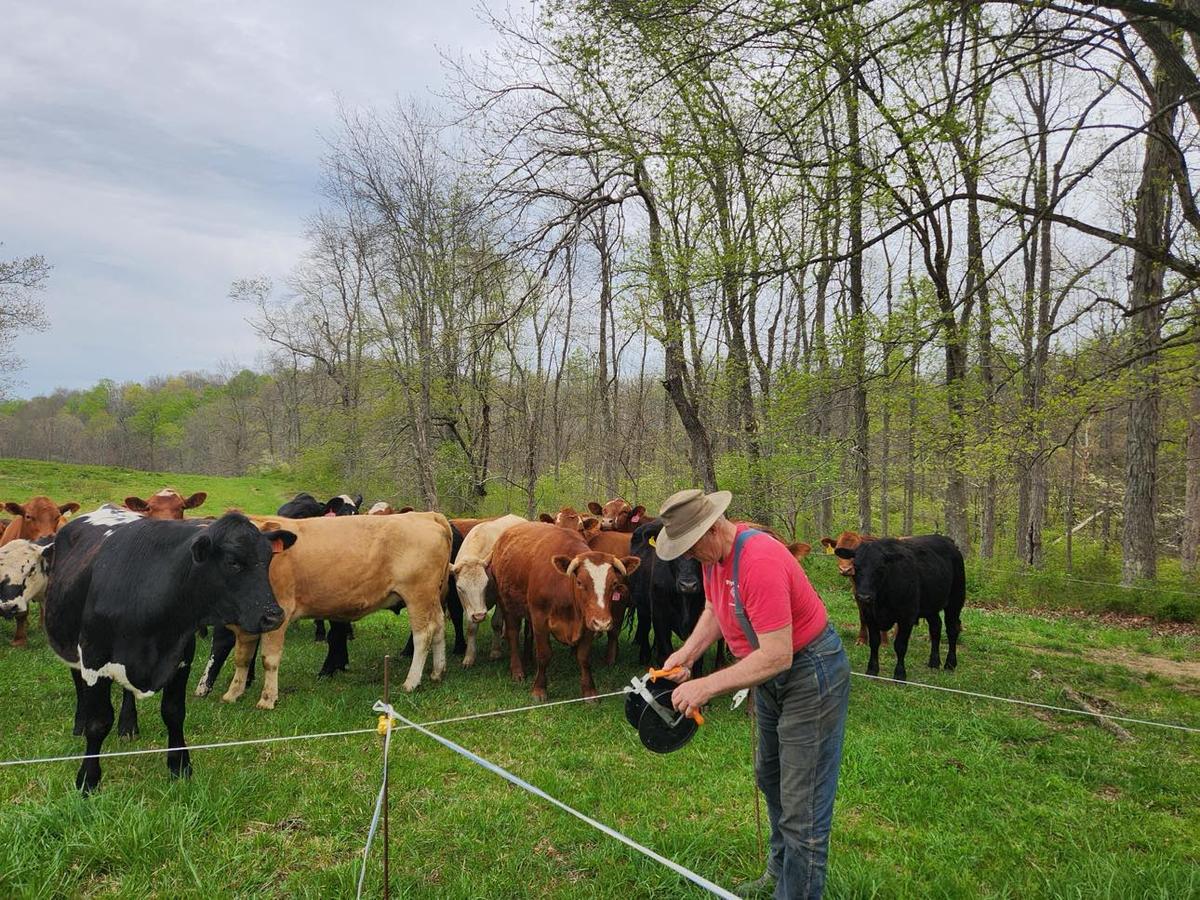
Joel Salatin moves cattle from one pasture to another at Polyface Farms outside of Swoope, Va., in 2024. Jeff Louderback/The Epoch Times
Half of America’s soybeans are exported and not even used in the country, he added.
Giving the benefit of the doubt to the inherent need for glyphosate “is like demanding special concessions for cocaine because some addicts have an inherent need for cocaine,” Salatin wrote in an opinion column for The Epoch Times.
“While they may be addicted, arguing that funding and fueling their continued addiction is necessary for their survival is dubious at best and erroneous at worst. The real national security breach is that we have thousands of farmers producing unnecessary corn and soybeans and a federal government determined to keep them in business,” he added.
Salatin advocates for Trump to issue a Food Emancipation Proclamation executive order. This, he said, would free U.S. homesteaders and small farmers from “tyrannical, scale-prejudicial regulations.
“If two consenting adults want to exercise freedom of choice to engage in a voluntary food transaction, they should not need a bureaucrat’s permission to do so,” Salatin said.
Government Initiatives
Lyons said that that MAHA Action is encouraging the Trump administration to perform an independent, transparent EPA review of glyphosate’s health profile; accelerate the shift to next-generation technologies and non-chemical herbicides to protect crops; provide tax incentives for next-generation equipment (including robotic weeding), matching grants for farmers who reduce reliance on glyphosate; authorize expedited processes for MAHA-approved alternatives; and expand the regenerative agriculture transition already underway.
On Feb. 27, Health and Human Services (HHS), U.S. Department of Agriculture (USDA), and EPA outlined a three-pillar strategy to address farm modernization and long-term food supply security.
The Feb. 27 news followed a Dec. 10, 2025, press conference when the Trump administration said it would allocate $700 million to help farmers adopt whole-farm regenerative practices, according to a USDA statement.

Robert F. Kennedy Jr. talks to a supporter at an organic farm in New Hampshire on Sept. 11, 2023. Jeff Louderback/The Epoch Times
Kennedy said the program will give farmers who are dependent on chemical and fertilizer inputs “an off-ramp” to help them transition to a model that emphasizes soil health.
There are currently efforts at the state, local, and federal levels to limit the use of glyphosate.
Meanwhile, Rep. Thomas Massie (R-Ky.) introduced a bipartisan bill that would withhold funding for enforcing Trump’s order.
“If we’re Making America Healthy Again, government shouldn’t be promoting glyphosate and providing liability immunity for corporations making it,” Massie said in a March 4 post on X.
Supreme Court Case
The Supreme Court will consider a case on April 27 that could limit the ability of plaintiffs to hold Monsanto liable.
John Durnell from Missouri is alleged to have developed non-Hodgkin’s lymphoma after years of exposure to Roundup. A jury already unanimously agreed, awarding him $1.25 million and finding that Monsanto failed to comply with state law requiring a warning about cancer risks.
Monsanto told the justices the case was deeply flawed due to the legal principle of preemption, which says federal law takes precedence over lower laws when the two are in conflict.
A day before the president signed his executive order, Bayer announced that Monsanto submitted a proposal for a $7.25 billion class‑action settlement.
The settlement, which still needs approval by a judge, would cover current and future claims for people who were exposed to Roundup and developed non-Hodgkin lymphoma.
In 2020, Bayer agreed to a separate $10 billion settlement regarding non-Hodgkin lymphoma claims.
Moms Across America is helping coordinate the People Versus Poison rally in front of the U.S. Supreme Court on that day.
Even if the Supreme Court rules in Monsanto’s favor, Honeycutt said that the mission to educate farmers and consumers will continue.
“If farmers choose to stop using those chemicals, it doesn’t matter whether the chemical companies have immunity. It doesn’t matter if they keep lying and telling people it’s safe,” Honeycutt said.
“If the farmers choose to move away from being stuck on a toxic treadmill of chemical cocktails, then the American people win, and the chemical companies lose.”