Gas prices reached as high as $6.10 per gallon in California on May 3, according to AAA. The national average hit $4.44 per gallon.
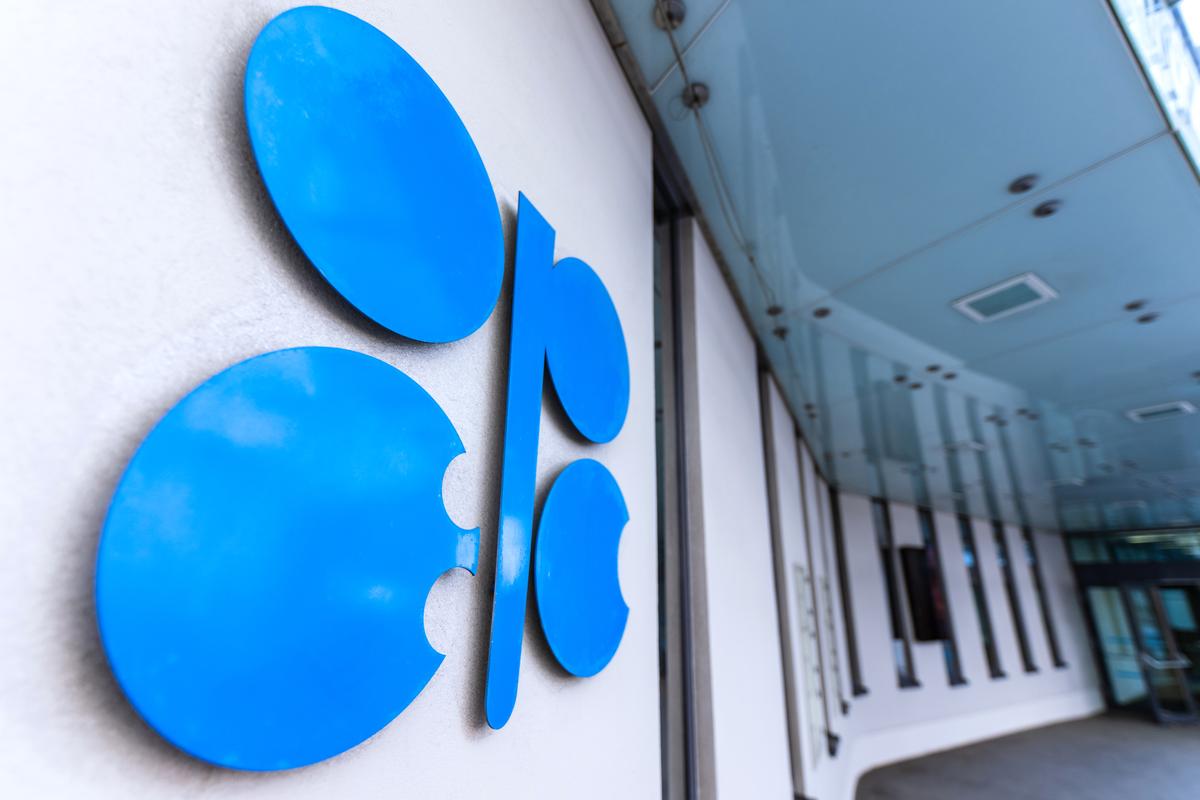
Exterior views of OPEC (Organization of the Petroleum Exporting Countries) headquarters in Vienna, Austria, on April 28, 2026. Christian Bruna/Getty Images
OPEC+ said on May 3 that seven member countries will raise oil output targets by 188,000 barrels per day in June, the third consecutive monthly increase as the alliance gradually unwinds earlier production cuts. The group announced the decision after a virtual meeting to review global market conditions.
The countries will ease voluntary production cuts that were first implemented in 2023 by key producers, including Saudi Arabia and Russia, along with Iraq, Kuwait, Kazakhstan, Algeria, and Oman.
OPEC can significantly influence oil prices, as its members control about 72 percent of total world crude oil reserves, according to the U.S. Energy Information Administration.
OPEC+ is a coalition that includes the Organization of the Petroleum Exporting Countries and major non-OPEC producers such as Russia.
Gas prices reached as high as $6.10 per gallon in California on May 3, according to the national survey by the American Automobile Association (AAA). The national average hit $4.44 per gallon.
The United States began its conflict with Iran on Feb. 28. The average price of a gallon of gas in the United States in February was $2.91, according to the U.S. Department of Energy.
Democrats have used the increased cost of gas to criticize U.S. President Donald Trump for the war with Iran.
Senate Majority Leader Chuck Schumer (D-N.Y.) posted on April 29 on X about increases in gas prices since “Trump started his costly, reckless war with Iran.”
The U.S. Department of Energy has released 17.5 million barrels of crude oil from the U.S. Strategic Petroleum Reserve from March 20 through April 24.
Releases from the reserve—the world’s largest emergency supply of crude oil—are typically authorized during major disruptions to global oil supply or significant price spikes. The reserve stores hundreds of millions of barrels of oil in underground salt caverns along the Gulf Coast.
U.S. presidents authorized emergency drawdowns from the reserve during Operation Desert Storm in 1991, because of Hurricane Katrina in 2005, and again in 2011 and 2022.
Trump said in an April 17 social media post that commercial shipping traffic can pass freely through the Strait of Hormuz, even as the United States maintains a targeted naval blockade against the Iranian regime.
The Strait of Hormuz—deep enough and wide enough to handle the largest crude oil tankers in the world—is one of the world’s most important oil choke points, according to the U.S. Energy Information Administration. On average, 20 million barrels per day—or 20 percent of the planet’s petroleum liquids consumption—went through the Strait of Hormuz in 2024.
The United States produced 13.6 million barrels per day in March 2026, setting a new record. OPEC+ produced on average 35.06 million barrels per day in March 2026, according to OPEC’s latest report. OPEC countries alone accounted for about 26 million barrels per day of that total.
The OPEC+ production increase of 188,000 barrels per day is a small fraction of that output.
According to OPEC data, the broader OPEC+ alliance produced about 35 million barrels of crude oil per day in March 2026. Russia is the largest non-OPEC producer in the group, pumping roughly 9 million barrels per day, while Saudi Arabia remains the leading producer within OPEC, also at about 9 million barrels per day.
Within the cartel, Iraq is the second-largest producer at roughly 4 million barrels per day, followed by Iran at slightly more than 3 million barrels per day. The United Arab Emirates and Kuwait contribute between about 2.5 million and 3 million barrels per day each.
Other OPEC members—including Nigeria, Libya, and Algeria—produce smaller but still significant volumes, up to about 1.5 million barrels per day, while countries such as Venezuela, Congo, and Gabon contribute smaller amounts.
Crude oil prices have risen sharply since the United States and Israel began their conflict with Iran on Feb. 28.
On Feb. 27, a day before the United States and Israel attacked Iran, a barrel of oil sold for $66.96, according to the Federal Reserve Bank of St. Louis. By March 13, the price had climbed to $98.48. The cost peaked to $114.01 a barrel on April 6 and then fell to less than $100 by the end of the month.
The cost of gas has been a major political issue.
A Pew Research Center survey conducted from March 23-29 found that gas prices were the top concern in the war with Iran.
“About seven-in-ten Americans (69%) are concerned about higher gas and fuel prices as a result of the U.S. military action against Iran, including 45% who are extremely concerned,” Pew stated. “Of the potential outcomes we asked about, this one worries Americans most.”
A gallon of regular gas cost $3.17 on May 3, 2025, and the price jumped to $4.44 a year later, according to AAA.
The Energy Information Administration tracks the cost of gas in the United States by averaging all grades for a single dollar amount. In June 2022, the cost of gas reached $5.03, the highest ever in the country. The price this year has jumped from $2.93 in January to $4.23 in April.
Trump said to reporters on April 30 that gas prices will drop after the war with Iran ends.
“The gas will go down. As soon as the war’s over, it’ll drop like a rock,” Trump said. “There’s so much of it, it’s all over the place, sitting all over the oceans of the world.”