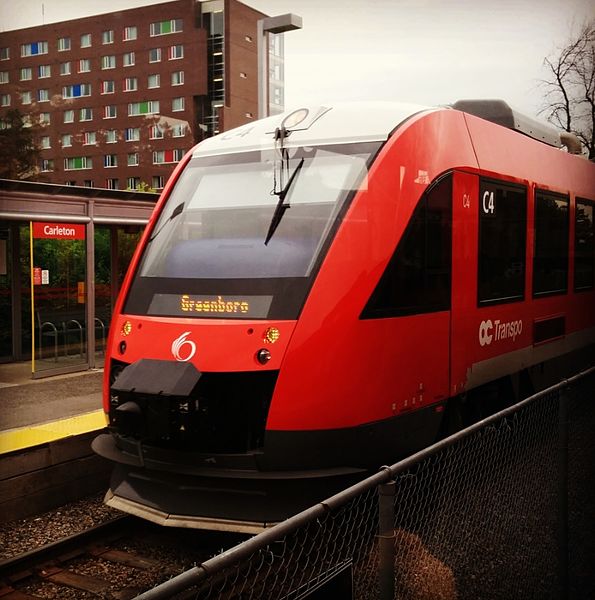
Ottawa’s O-Train. ( Attribution-Share Alike 4.0 International, Ottbike)
Canada is seeing a long-term decline in transit use due to the widespread adoption of remote work, according to a recent report by Statistics Canada. The Infrastructure Department has warned that system deficits cannot be solely shouldered by taxpayers.
The report attributes the decline to various factors, including the rise in remote work that reduced passenger trips for former public transit commuters now working from home. This shift also eased traffic, prompting some non-remote workers to switch to car commuting.
In May 2023, 15.9 million Canadians usually commuted to work outside their homes, representing roughly 80 percent of the 19.9 million workers, according to the report. StatCan estimates that the surge in remote work from 2016 to 2023 potentially reduced commuters by about 2.6 million.
Moreover, the report notes that COVID-19-related health concerns, coupled with stay-at-home orders and physical distancing measures, might have permanently influenced some individuals to abandon public transit.
In a separate report titled “Urban Public Transit,” released on July 19, 2023, StatCan revealed that fare revenues for all transit operations across the country were $46 million lower than monthly receipts before the pandemic. Despite a gradual recovery, ridership in May 2023 still lagged, standing at 22 percent below pre-pandemic levels.
Financial Burden
StatCan’s findings come after the Department of Infrastructure warned that taxpayers alone may be incapable of shouldering the financial burden arising from deficits in transit systems.